Why Choose Low Volume Injection Molding?
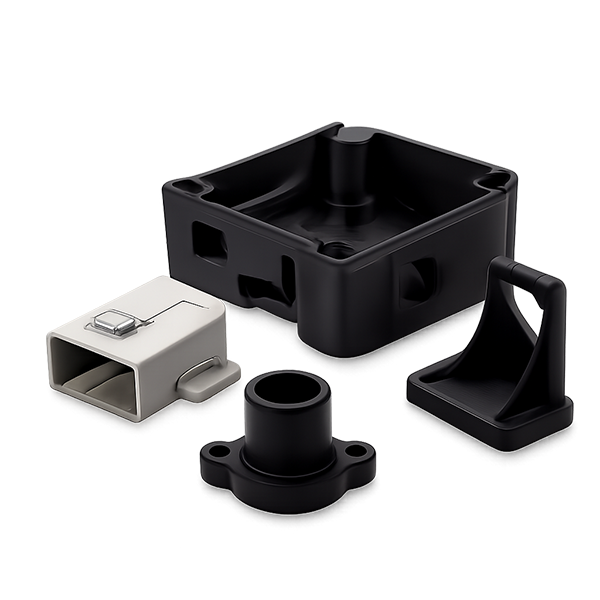
Low volume injection molding helps manufacturers move from product development to real production with lower upfront tooling investment and greater production flexibility. It is especially suitable for pilot runs, bridge production, market validation, and small batch plastic parts that require production-grade materials and repeatable quality before full-scale mass production.
Low Volume vs Mass Production
For early-stage and low-to-mid volume projects, low volume injection molding provides a faster and more cost-effective path to real molded plastic parts before committing to high-volume steel tooling. Here is a general process recommendation by production quantity:
• 1–50 pcs: CNC Machining or 3D Printing – ideal for prototypes and functional verification.
• 100–1,000 pcs: Low Volume Injection Molding – better balance of tooling cost, speed, and molded part quality for pilot runs and market validation.
• 10,000+ pcs: Mass Production Injection Molding – suitable for long-term, large-scale production with the lowest unit cost.
| Factor | Low Volume Injection Molding | Mass Production Injection Molding |
|---|---|---|
| MOQ | 100–5,000 pcs | 10,000+ pcs |
| Tooling Cost | 40–70% lower with aluminum molds | Higher steel tooling investment |
| Mold Lead Time | 7–15 days | 4–10 weeks |
| Production Flexibility | Easy design changes | Limited after tooling approval |
| Unit Cost | Higher per part | Lower at high volumes |
| Best Fit | Pilot runs / bridge production | Stable long-term production |
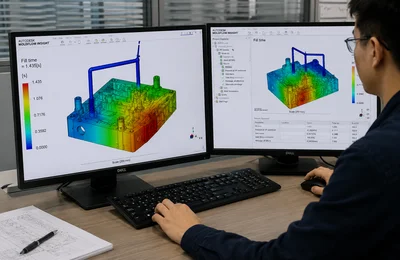
Optimize gate location, filling, cooling, and flow behavior to reduce sink marks, warpage, and molding defects.
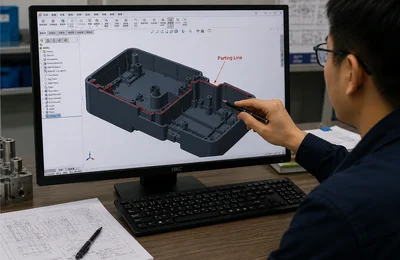
Review parting line position to balance mold structure, appearance, and production stability.
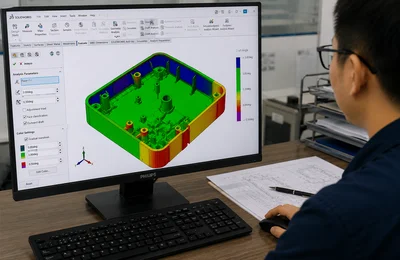
Check draft angles and ejection conditions for smoother demolding and longer mold life.
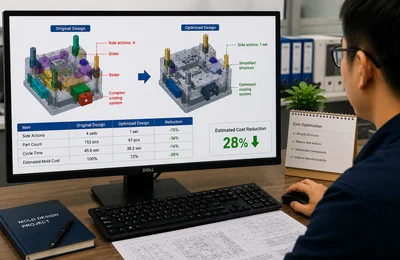
Simplify tooling structure, reduce side actions, and optimize geometry to lower mold cost.
Low Volume Injection Molding capabilities
Built for market validation and pre-production manufacturing, our low volume injection molding services provide a practical path from prototype to scalable production.
| Capability | Details |
|---|---|
| Tooling Type | Aluminum tooling / P20 steel tooling |
| Typical Mold Lifespan | Aluminum Tooling:500–5,000+ parts P20 Steel Tooling:5,000–50,000+ parts |
| Material Support | ABS / PC / PP / PE / PA / POM / TPU and more |
| Typical Tolerance | ±0.10–0.20 mm for many molded plastic parts, depending on material, part size, and geometry. |
| Secondary Operations | Painting / Printing / Welding / Assembly |
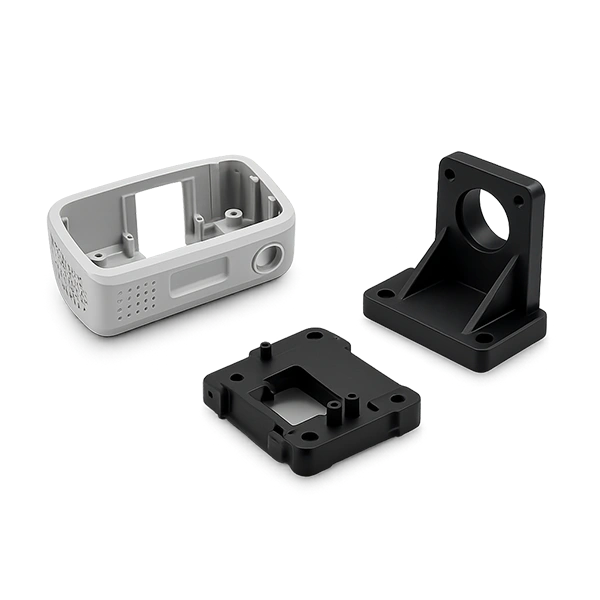
What Really Determines Low Volume Injection Molding Cost
Low volume injection molding cost is not just about the part price. Tooling, setup, material selection, production volume, and finishing requirements all affect the final budget. This cost breakdown helps you understand where the money goes and how to reduce unnecessary tooling or production expenses.
| Cost Component | Typical Share | Typical Cost Range | Includes |
|---|---|---|---|
| Tooling / Mold Cost | 45–60% | Aluminum: USD 1,500–8,000 / P20 steel: USD 5,000–20,000+ | Mold design, machining, mold base, T1 sampling, and tooling adjustments |
| Material Cost | 8–15% | Common plastics: USD 1–5/kg / Engineering plastics: USD 5–15+/kg | Plastic resin, additives, color masterbatch, and material loss |
| Machine & Setup Cost | 10–15% | USD 100–1,000 | Machine setup, mold trial, parameter tuning, and production changeover |
| Molding & Labor Cost | 12–20% | USD 0.2–5 per part | Injection molding cycle time, operator labor, and in-process quality control |
| Secondary Processing & Packaging | 5–10% | USD 0.1–3 per part | Painting, printing, assembly, inspection, and packaging |
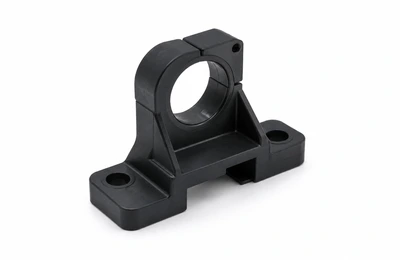
Equipment housings, sensor brackets, and control system components.
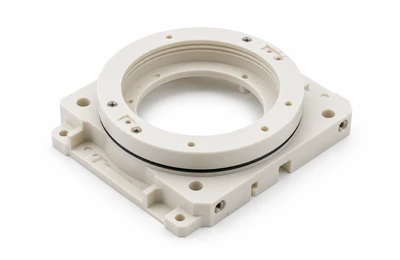
Precision plastic parts for semiconductor and high-tech manufacturing systems.
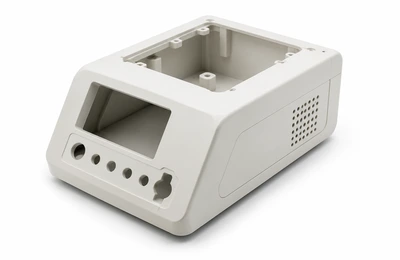
Small-batch device housings and testing instrument components.
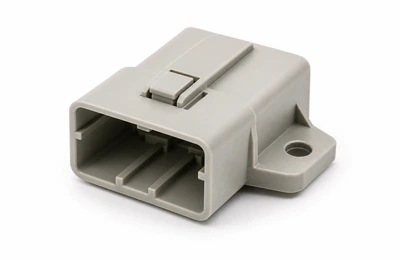
Connector housings, insulation parts, and electrical plastic components.
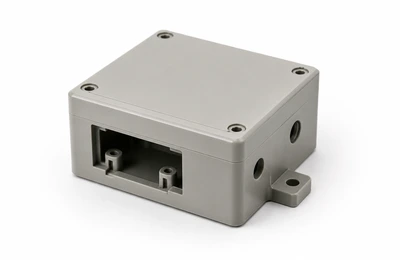
Custom plastic covers, structural parts, and functional industrial components.
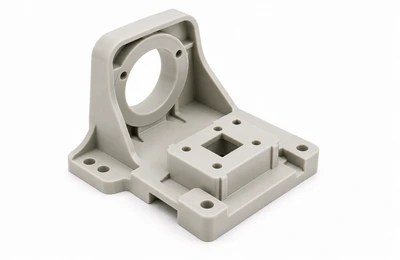
Lightweight brackets, enclosures, and automation system parts.
Low Volume Injection Molding FAQ