Performance changes may occur during the sterilisation of medical injection moulding materials. The high temperature and humidity of Autoclave may cause hydrolysis and warping. EtO needs to consider gas adsorption and residue. Gamma and E-Beam may change the molecular structure of the polymer, causing yellowing, embrittlement or a decline in mechanical properties.
Holly will examine the effects of each of the four common sterilisation techniques (autoclave, EtO, gamma and e-beam) on medical injection-moulded plastics, and the compatibility of various medical plastics with each sterilisation technique.
1. Requirements for autoclave sterilisation for medical plastics injection moulding
The exposure of plastics to high-temperature saturated steam is direct during autoclave and the compatibility of materials is related to heat resistance and hydrolysis resistance.
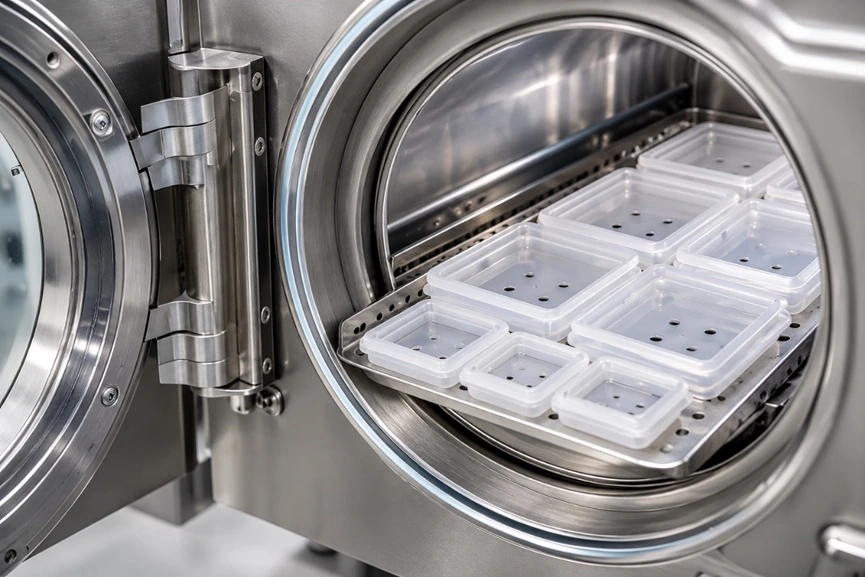
Medical injection moulding parts Autoclave sterilisation
1) Autoclave operating temperature and sterilisation conditions
A sterilisation technique which relies on the use of high-pressure steam is known as autoclave. The pressure is increased, thereby bringing the steam to the necessary temperature, and the sterilisation is finished in the given time.
The temperature of autoclave commonly used in medical devices is 121°C and 132–135°C. Typical sterilisation conditions include: 121°C / 30 min can be used for gravity displacement steriliser, and 132°C / 4 min can be used for pre-vacuum steriliser.
2) The effect of high-temperature steam on injection moulding plastics
The impact of Autoclave on medical injection moulding mainly comes from hydrolysis, thermal ageing and residual stress release.
Hydrolysis will cause the polymer molecular chain to break and the molecular weight to decrease, which will eventually manifest as Elongation, Impact Strength and other mechanical properties to decrease.
Thermal ageing will accumulate with the repeated cycle. The material may gradually appear yellowing, brittleness, surface cracking and mechanical properties decline. At the same time, high temperature may also cause thin-walled structure softening, warping and permanent size changes.
The residual stress of injection moulding parts is an important failure factor. Near the gate, weld lines, sharp corners and wall thickness mutation areas usually have high residual stress. The high temperature cycle will accelerate the release of these stresses, causing crazing, cracks or size changes in the parts.
3) Which medical plastics are suitable for Autoclave?
PEEK and PPSU are high-performance plastics commonly used in repeat autoclave medical devices. Medical-grade PEEK can withstand more than 1,500 cycles in the 134°C steam sterilisation test, and PPSU can withstand hundreds to thousands of cycles. PEEK is resistant to high temperature, hydrolysis, and has good mechanical performance maintenance ability; PPSU has outstanding hydrolysis resistance and repeated steam sterilisation performance, and is often used in medical device parts that require frequent Autoclave.
PSU and PEI can also be used for high-temperature steam sterilisation, and the cycle resistance is usually lower than that of PEEK and high-performance PPSU; there are also medical grades of PP and PC that can be autoclaved, which are more suitable for limited cycles or specific temperature conditions (around 10 cycles or fewer), among them, PP is often used for cost-sensitive medical parts, and PC is suitable for parts that require transparency and impact performance.
2. Requirements for medical injection moulding plastics for EtO sterilisation
EtO is a low-temperature gas sterilisation, which has less thermal impact on plastics.
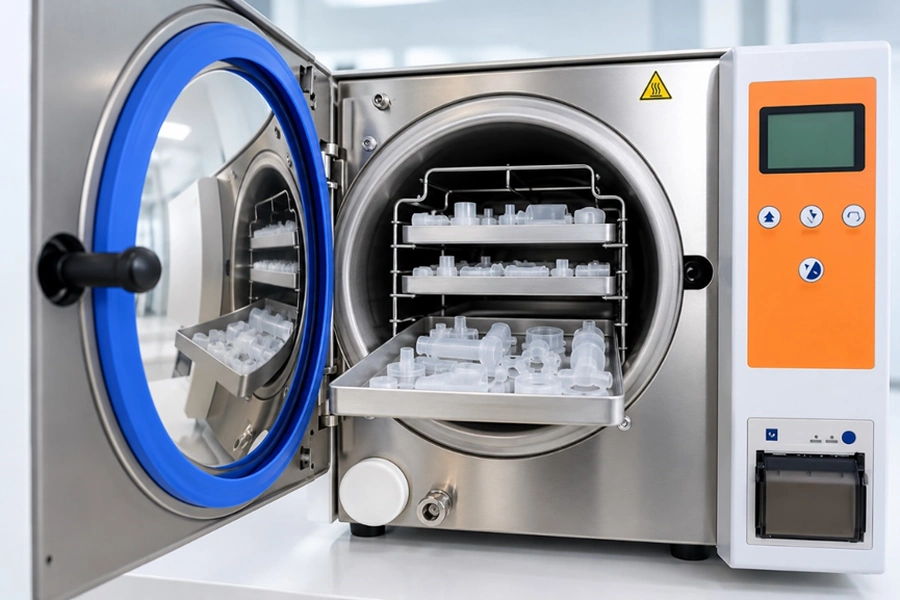
Medical injection moulding parts EtO sterilisation
1) Working temperature and sterilisation conditions of EtO
EtO (Ethylene Oxide) is a low-temperature sterilisation method that uses ethylene oxide gas to kill microorganisms, which is suitable for medical devices and plastic parts that cannot withstand high-temperature steam.
The common sterilisation temperature of EtO is 37–63°C, the concentration of EtO is about 450–1200 mg/L, the relative humidity is 40–80%, the gas exposure time is usually 1–6 h, and the aeration time is 2–14 days.
2) The impact of EtO on injection moulding plastics
The temperature of EtO is lower, and the thermal deformation and high-temperature ageing of plastics are obviously less than Autoclave. The main effect is that EtO gas is adsorbed by plastic and forms residues, and some materials take a long time to complete aeration.
3) Which medical plastics are suitable for EtO
EtO has a wide range of compatibility with medical plastics. Common PP, PC, ABS, PEEK, PPSU, PSU and PEI all have medical grades suitable for EtO sterilisation. Due to the low sterilisation temperature, EtO can also be used for materials such as PP, PC and ABS that cannot withstand high-temperature steam for a long time. Some medical-grade TPE and TPU are also suitable for EtO and are often used in seals, hoses, flexible connectors and Overmoulding components.
3. Requirements for medical injection moulding plastics by Gamma sterilisation
Gamma sterilisation uses ionising radiation, and the impact on plastic is mainly from molecular chain breakage, cross-linking, and the resulting changes in colour and mechanical properties.
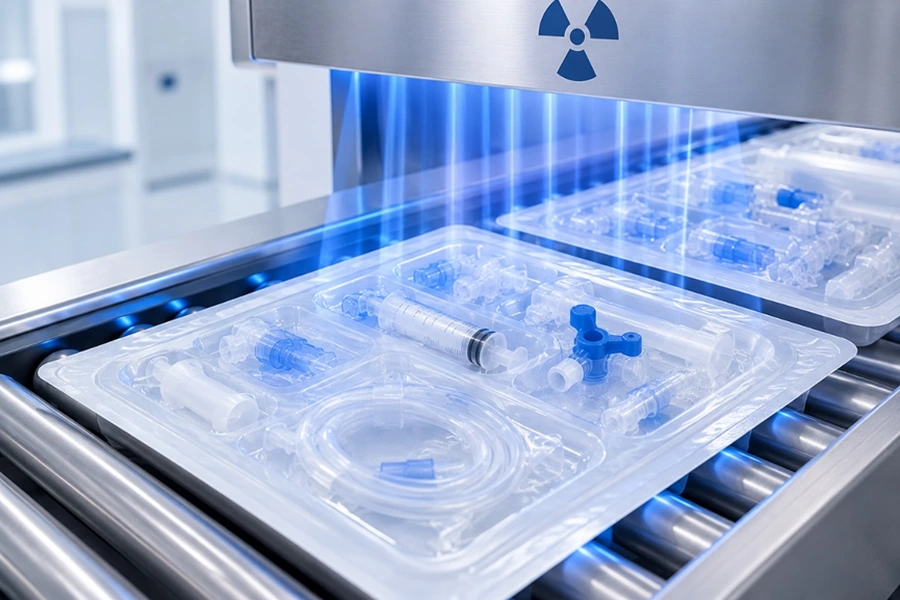
Medical injection moulding parts Gamma sterilisation
1) Irradiation dose and sterilisation conditions of Gamma
Gamma (gamma ray) sterilisation uses high-energy ionising radiation generated by Co-60 (cobalt-60) to kill microorganisms without the need for high-temperature steam or sterilisation gas.
The absorbed dose of Gamma sterilisation is expressed in kGy (kilogray), and the common reference dose of medical devices is about 25 kGy. ISO 11137 also includes the establishment and verification methods of sterilisation doses such as 15 kGy and 25 kGy.
2) The effect of Gamma irradiation on injection moulding plastics
Gamma radiation will cause the polymer to undergo Chain Scission (molecular chain breakage) and Crosslinking. Molecular chain breakage may cause Elongation and Impact Strength to decrease, making the plastic gradually brittle; cross-linking may change the rigidity, elongation and other mechanical properties of the material.
Gamma may also cause yellowing, decreased transparency and surface colour changes, among which transparent PC is particularly sensitive to colour changes. The higher the irradiation dose or the more cumulative number of irradiations, the more obvious the colour and mechanical properties of the material usually change.
3) Which medical plastics are suitable for Gamma?
PEEK, PPSU, PSU, PEI, and Radiation-Stabilised PC and PP can be used for Gamma sterilisation medical products. PEEK and PPSU have good radiation tolerance; ordinary PP is more sensitive to radiation oxidation; transparent PC needs to focus on solving the problem of yellowing. POM, PTFE and other polymers that are sensitive to ionising radiation are not suitable as priority materials for high-dose Gamma sterilisation.
4. Requirements for medical injection-moulded plastics by E-Beam sterilisation
E-Beam belongs to ionising radiation sterilisation. Compared with Gamma, E-Beam has a higher dose rate and faster processing speed, but lower penetration ability.
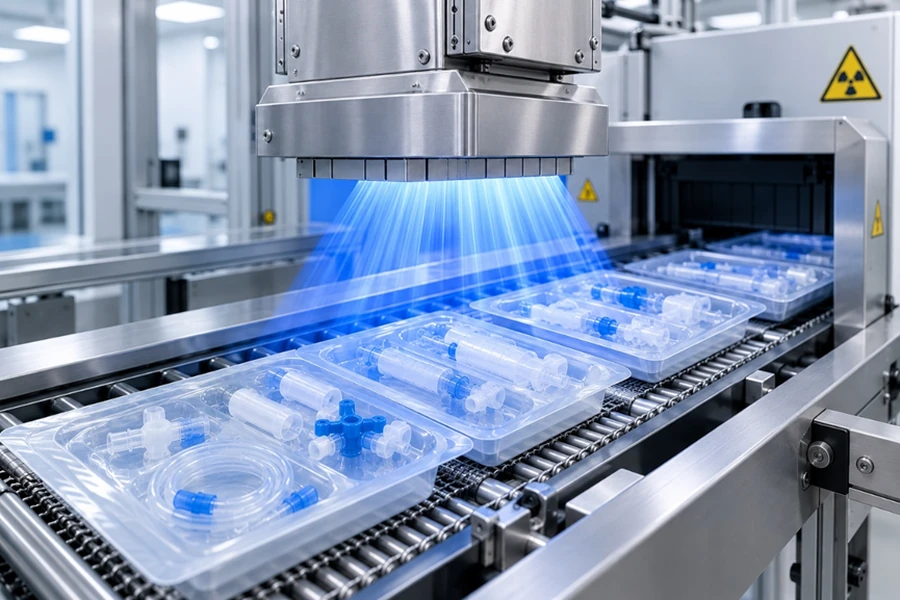
Medical injection moulding parts E-Beam sterilisation
1) Irradiation dose and sterilisation conditions of E-Beam
E-Beam (Electron Beam) uses high-energy electron beams generated by electron accelerators to kill microorganisms. Like Gamma, it belongs to ionising radiation sterilisation, and the absorbed dose is also expressed in kGy. Medical device E-Beam sterilisation establishes and verifies the dosage according to ISO 11137 and other irradiation sterilisation systems.
2) The impact of E-Beam on injection moulding plastics
The high-energy electrons of E-Beam will cause the polymer to break the molecular chain, cross-link and oxidise. Molecular chain fracture will reduce the molecular weight of the material, causing Elongation and Impact Strength to decrease, and the material to become brittle; cross-linking will limit the movement of the molecular chain, increasing the rigidity of the material and reducing the elongation rate.
E-Beam may also cause yellowing, discolouration and decreased transparency. Materials that are sensitive to radiation oxidation, such as PP, may become brittle; transparent plastics such as PC may change in colour and optical properties after irradiation.
3) Which medical plastics are suitable for E-Beam
PEEK and PPSU have good radiation tolerance to E-Beam, and Radiation-Stabilised PC can reduce yellowing and optical property changes caused by electron beam irradiation. SABIC ULTEM™ HU1004 in PEI can be sterilised by E-Beam.
5. Comparison of Autoclave, EtO, Gamma and E-Beam
There are obvious differences in temperature, impact on plastics and material requirements in the four sterilisation methods. The main differences are shown in the following table.
| Sterilisation method | Typical temperature / dosage | Cycle | The main impact on plastics | Key points of material selection | Common product features |
| Autoclave | 121°C, 132–135°C | 30–60 minutes | Hydrolysis, thermal deformation, warping, performance ageing | Heat resistance, hydrolysis resistance, cycle life | Reusable medical equipment |
| EtO | 37–63°C | 3–15 days (including aeration) | EtO adsorption, residue and aeration | Low temperature compatibility, residual control | Heat-sensitive and complex structural products |
| Gamma | Room temperature, common reference dose is about 25 kGy | Several hours | Chain breakage, cross-linking, yellowing, brittleness | Radiation Stability, cumulative dose | Bulk terminal sterilisation products |
| E-beam | Room temperature, determined according to the verified dose | Seconds to minutes | Chain breakage, cross-linking, oxidation, colour and mechanical property changes | Radiation Stability, mechanical property retention | Thinner or less dense medical products |
6. Sterilisation compatibility of common medical injection-moulded plastics
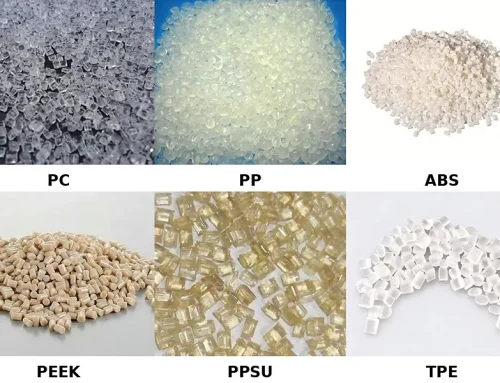
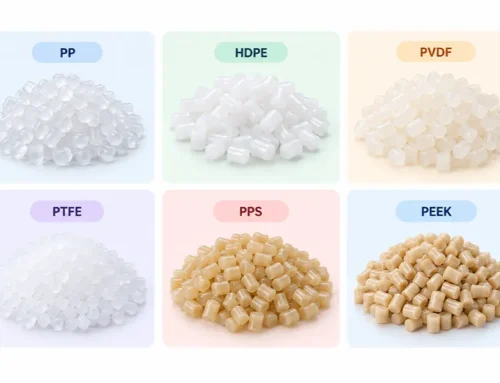
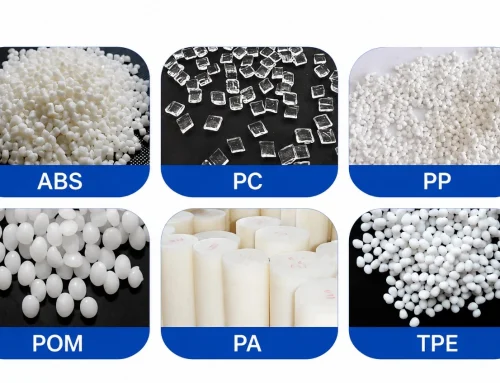
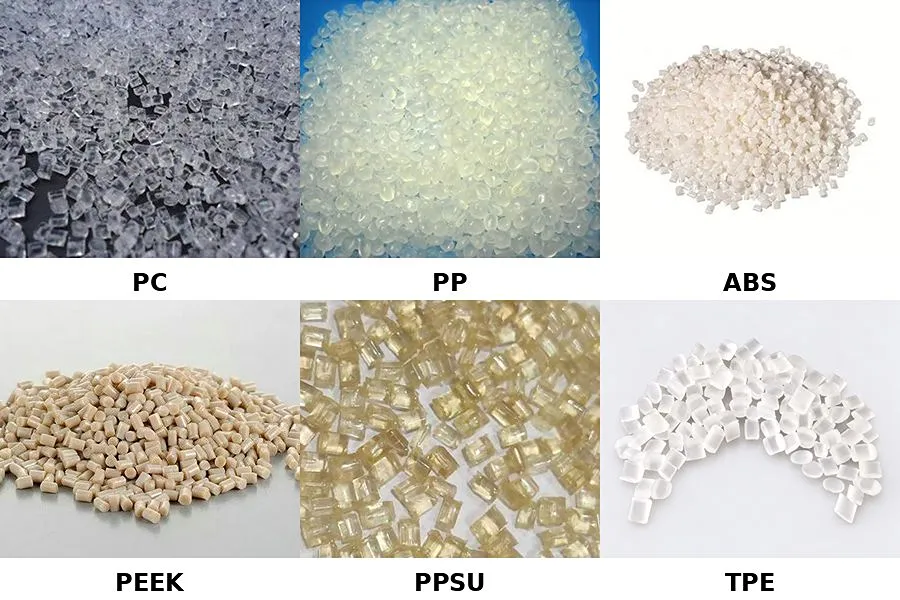
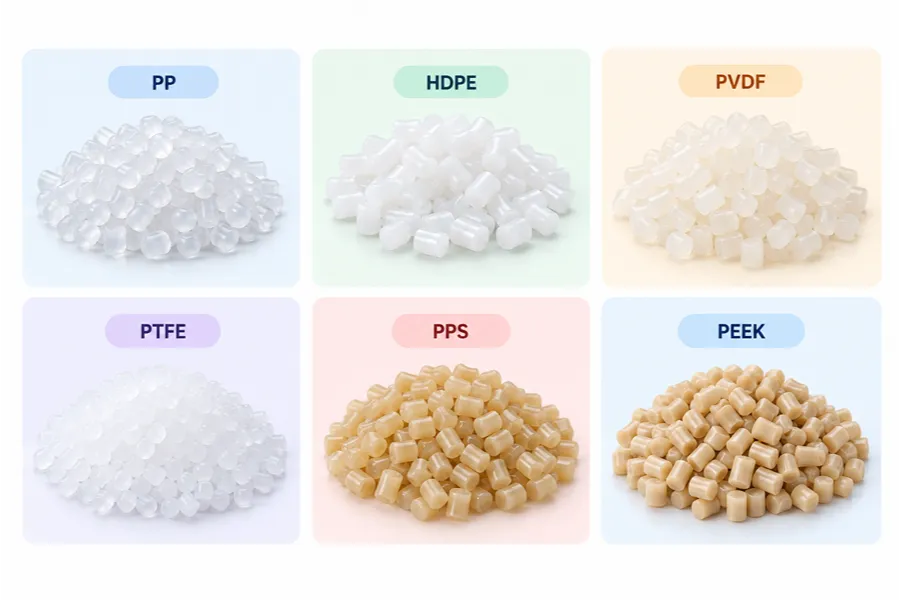
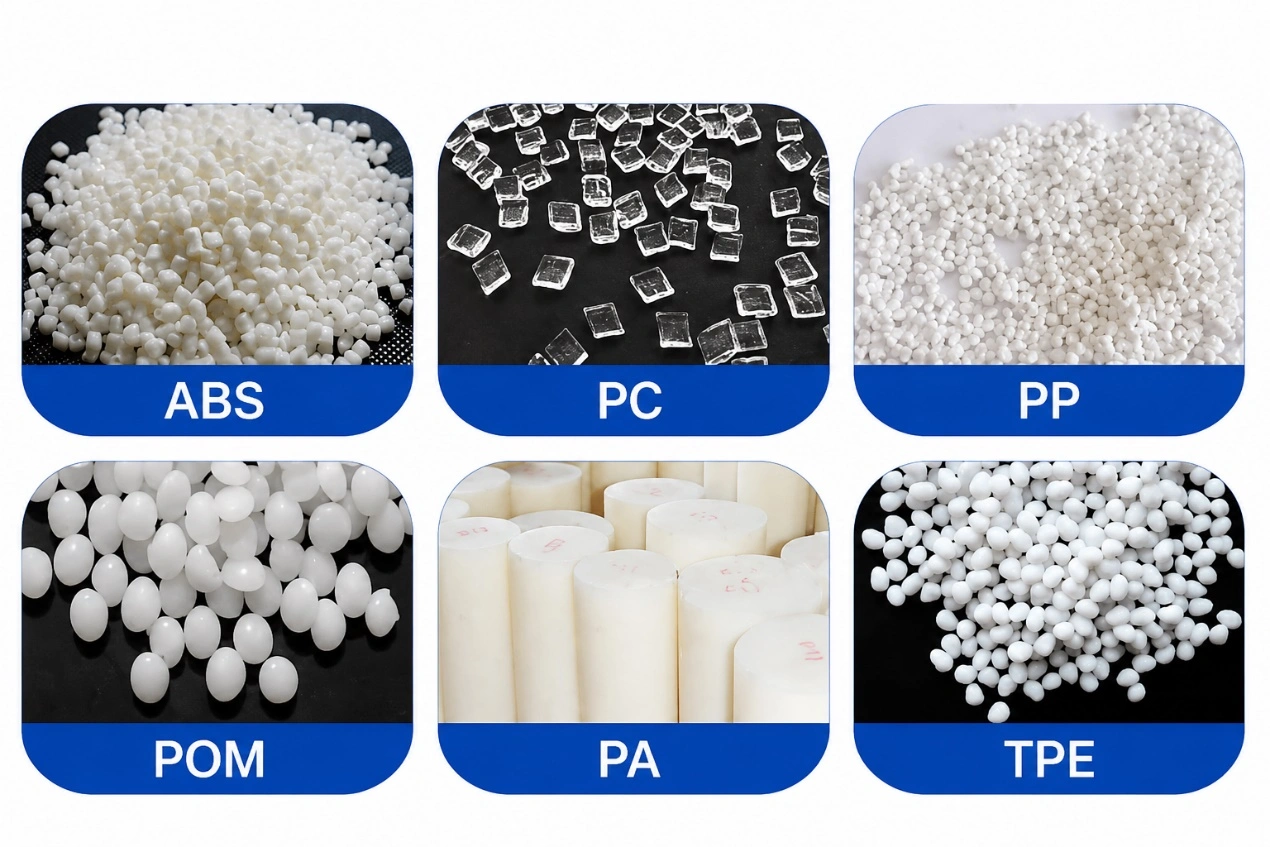
The tolerance of PP, PC, ABS, PEEK, PPSU, PSU, PEI and TPE/TPU to different sterilisation methods is obviously different. The sterilisation compatibility of these materials is explained below.
1) Polypropylene (PP)
PP has low cost and good chemical resistance. It is often used in disposable medical consumables, laboratory supplies, containers and some medical components. PP is suitable for EtO, and some heat-resistant medical-grade PP can be autoclaved, such as Ensinger TECAPRO MT. Ordinary PP is not suitable as Gamma and E-Beam sterilisation materials.
2) Polycarbonate (PC)
PC has high transparency and high impact strength, and is often used in transparent medical housings, liquid storage components, connectors and observation windows. PC is suitable for EtO. Some highly heat-resistant medical-grade PCs can be autoclaved, such as SABIC LEXAN™ HPH4504. When used for Gamma and E-Beam sterilisation, irradiation-stabilised medical PCs such as SABIC LEXAN™ HPS series can be selected.
3) ABS
ABS has good processing performance and high impact strength, and is often used in medical equipment shells, control parts and non-high temperature structural parts. ABS is more suitable for low-temperature sterilisation methods such as EtO, and ordinary ABS is not suitable for long-term repeated Autoclave sterilisation. For Gamma sterilisation, special medical-grade ABS can be selected, such as SABIC CYCOLAC™ HM1214, HM1214F and other irradiation sterilisation grades.
4) Polyether ether ketone (PEEK)
PEEK has good high temperature resistance, hydrolysis resistance, chemical resistance, and can maintain high mechanical strength. It is often used in surgical instruments and reusable high-performance medical components. PEEK is suitable for Autoclave, EtO, Gamma and E-Beam.
5) PPSU/PSU/PEI
PPSU, PSU and PEI are all high-temperature resistant medical engineering plastics, which can be used for EtO and Autoclave, among which PPSU’s hydrolysis resistance and repeated steam sterilisation performance are more prominent; SABIC ULTEM™ HU1004 (PEI) can be used for Steam, EtO, Gamma and E-Beam sterilisation.
6) TPE/TPU
TPE and TPU are flexible and elastic, and are commonly used in medical seals, valves, hoses, flexible connectors and overmoulding. Many medical-grade TPE/TPU are suitable for EtO, Gamma and E-Beam. For example, KRAIBURG THERMOLAST® M medical-grade TPE series contains grades that can use EtO and irradiation sterilisation; some heat-resistant medical-grade TPE/TPU can also be autoclaved.
7. Conclusion
The sterilisation compatibility of medical plastics needs to be evaluated for the specific Resin Grade. Repeat Autoclave products need to pay attention to heat resistance, hydrolysis resistance and cycle life, while Gamma and E-Beam products need to pay attention to changes in colour, toughness and mechanical properties after irradiation.
Holly provides DFM, mould manufacturing and Injection Moulding services for medical plastic parts. You can send us 3D Drawing, Material Requirements and Sterilisation Method, and we will conduct DFM and project evaluation according to the part structure, materials and sterilisation requirements, and provide a quotation for mould and injection moulding production.