
3D printing is the name and terminology also known as rapid prototyping 3D printing. In ancient times, creating and 3D working was very expensive and slow, but with the latest and advanced techniques, you can do 3D printing with high quality and lower cost than what you need to develop a 3D printing prototype. The first and most important is that you must have access to 3D printing materials. The other two factors are saving time and money.
1. What is 3D printing?
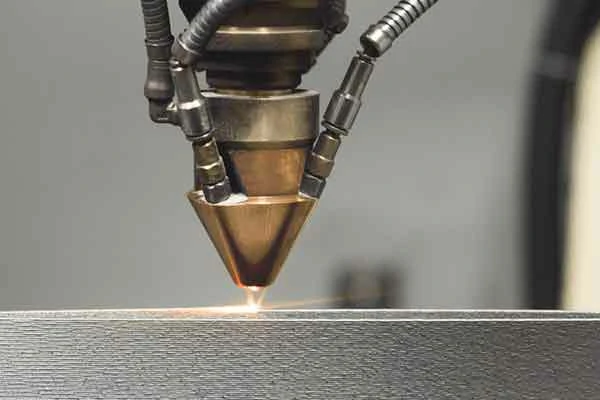
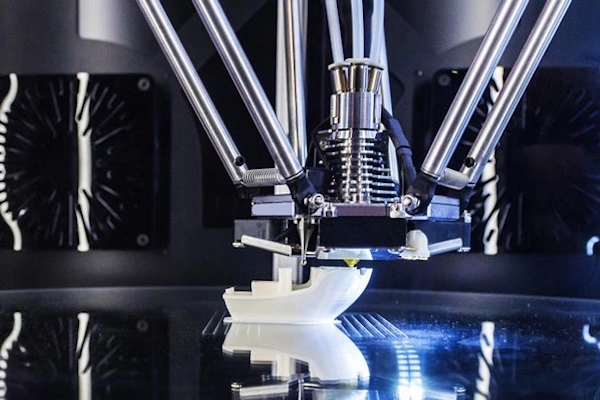
3D printing or additive manufacturing is the process of creating three-dimensional objects from digital files. The creation of 3D printed objects is achieved through an additive process. During the adding process, an object is created through successive layers of materials until the object is created. Each of these layers can be thought of as a thinly sliced cross-section of the object. 3D printing is the opposite of subtractive manufacturing, where a milling machine is used to cut or hollow out a piece of metal or plastic. 3D printing can create complex shapes with less material than traditional manufacturing methods.
2. Why use a 3D printer for rapid prototyping?
In short, it’s fast and relatively cheap. Going from an idea to a 3D model, to a prototype in your hands is a matter of days, not weeks. Iterating is easier and less expensive, and you don’t need expensive molds or tools. Besides rapid prototyping, 3D printing is also used for rapid manufacturing. Rapid manufacturing is a new manufacturing method where businesses use 3D printers for short-run/low-volume custom manufacturing.
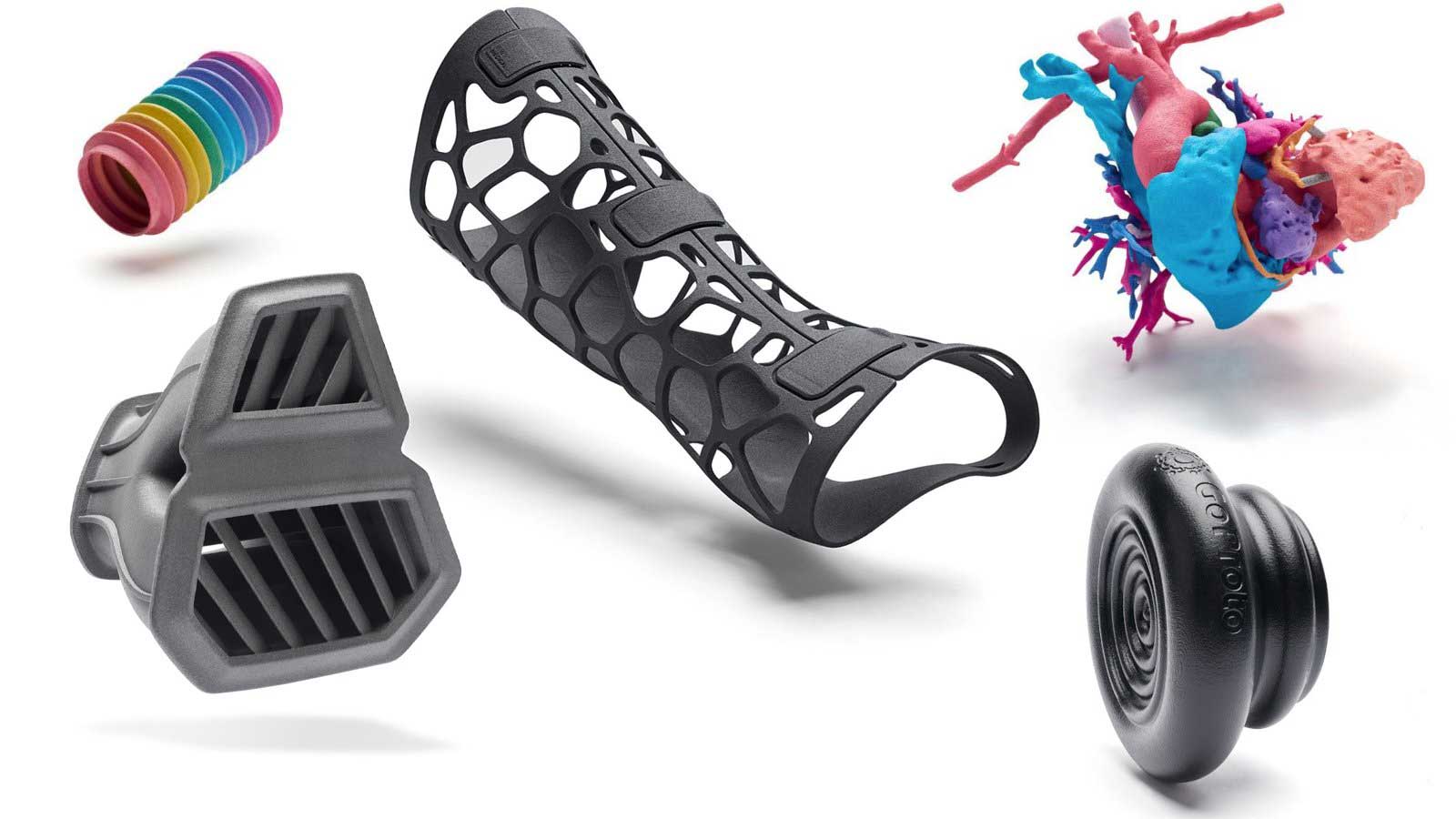
3D printing encompasses many forms of technology and materials, as 3D printing is being used in almost every industry you can think of. It’s important to think of it as a cluster of different industries with countless different applications. Here are some examples:
- Consumer goods (glasses, footwear, design, furniture)
- Industrial products (manufacturing tools, prototypes, functional end-use parts)
- Dental products
- Prosthetics
- Architectural scale models and drawings
- Reconstruction of fossils
- Imitation of ancient artefacts
- Evidence reconstruction in forensic pathology
- Movie props
3. Benefits of 3d printing prototype:
3D printing prototyping is very beneficial for the worker and organization but remembers that you can get help if you choose the right and good quality material. Moreover, you can get benefits if you choose the correct procedure because it saves them both time and money. The benefits of the 3D printing prototype are as follow:
1) You can create various iterations
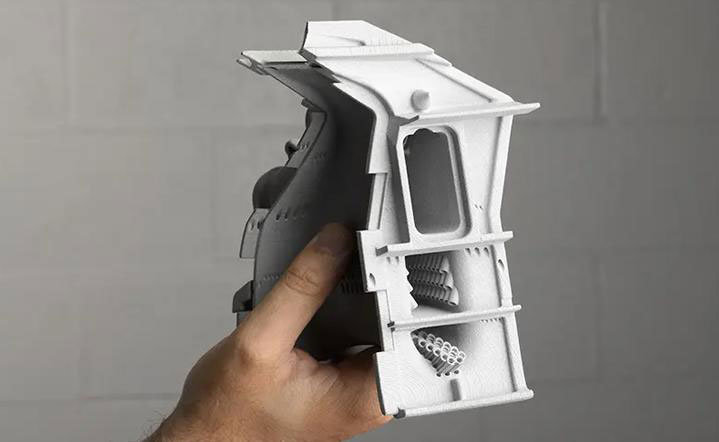
Liberty in 3D printing is much more than that of other printing techniques. The beneficial aspects are beautiful and require design by using the digital 3D model and 3D modeling software. Moreover, this technology allows the world to create any project from scratch, and you can get more precise and quality visualization. This technique is helpful to make a variety of iterations. It means the prototype perfectly matched your desired product or fulfilled the requirements of your desired products.
2) Save Money
You can save the most significant portion of your income by using this technique because the cost or expense of photo printing is lower than injection molding and additive manufacturing.
Here the question comes to mind: what is the reason behind the lower cost? The biggest reason is that you can create the mould to create objects that are undoubtedly the most beneficial and significant advantage. Time and money are the two precious things for every company. Due to this reason, 3D printing is supportive and helps in creating objects for every organization.
3) Time saver
In addition to the most significant benefit of 3D printing, you can do several iterations as you want. Furthermore, the process of 3D printing prototypes is also speedy. Instead of creating the mould and waiting for the whole process of injection modelling, you can get direct access to the object. In conclusion, this technique and procedure are perfect for efficient or quick prototyping, which is very helpful in creating fast development of the project.
4) Run tests with functional prototypes:
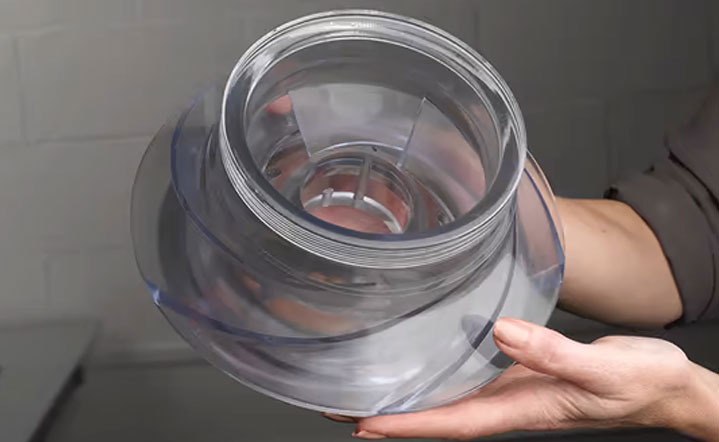
We are very thankful for the availability of a variety of 3D printing materials and services available online. Due to the online shopping facility, access to the latest and advanced material is straightforward. Out of these many of the materials are adapted to production which is very helpful to use your prototyping process. So if you are required to do the test, these materials show you they have more advanced, impressive, and latest properties for manufacturing advanced and latest functional prototypes.
4. How does 3D printing work?
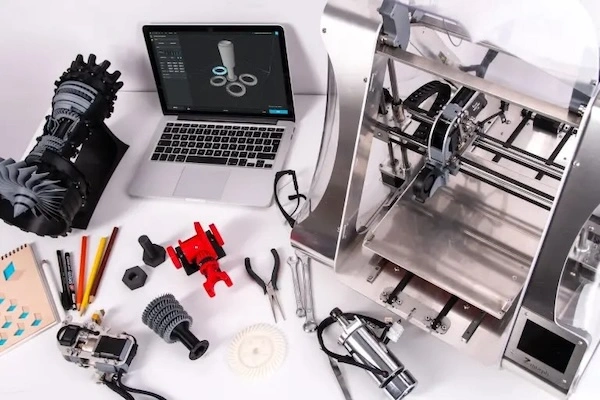
Producing a 3D part is a multi-step process. The first step is the making of an architectural design which is usually done with a CAD model or 3D Scan data. Then the file is converted into a readable format like OBJ or STL.
Already installed software in the printer adjusts the orientation, size, height and dimension, layers of the 3D model before printing. The print is formed using laser technology to cure the liquid resin into hard plastic or by fusion of small polymer particles at high temperatures to solidify.
Uncured liquid resin or excessive powder polymer particles are cleaned as the printing is done. It is clean by rinsing in isopropyl alcohol, compressed air, or media blaster depending on the printing technology.
1) Design
3D printers generate three-dimensional models of computer-aided design (CAD) software, and mathematical representations of any three-dimensional surface or 3D scan data develop. The design is then exported as an STL or OBJ file that print preparation software can interpret.
3D printers contain print settings software and divide the digital pattern into horizontal cross-sections of the component into layers. Adjustable printing parameters include guidance, layer height, material, support structures (if required). The program transmits instructions over a wireless or cable connection to the printer after the set-up is over.
2) 3D Print
Some 3D printers utilize a laser to cure liquid resin into solid plastic, while others employ high temperatures to fuse tiny particles of polymer powder to create components. Most 3D printers may be left unattended until the job is finished, and contemporary systems will automatically replace the material needed for the pieces from cartridges.
3) Post Process
The printed parts may need to be rinsed in isopropyl alcohol (IPA) to remove any uncured resin from their surface, post-cured to stabilize mechanical properties, manual work to remove support structures, or cleaning with compressed air or a media blaster to remove excess powder, depending on the technology and the material. With the help of accessories, some of these procedures may be automated.
3D printed pieces for specific purposes may be utilized immediately or after processing and the appropriate ends may be machined, primed, painted, or attached. In addition to traditional techniques of production, 3D printing sometimes acts as an intermediary stage such as positive for the investment of dental and dental gems and molds.
5. Processing of various 3D printing technologies
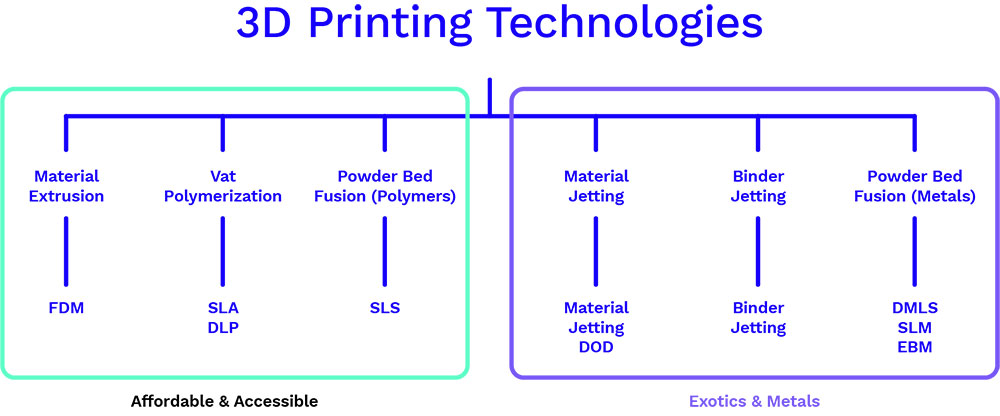
3D printing is a versatile technology and it is getting advanced day by day. Every day brings new specifications in this field. Different types of technologies are used for 3D printing; let’s go through some of these.
1) Fused Deposition Modeling (FDM)
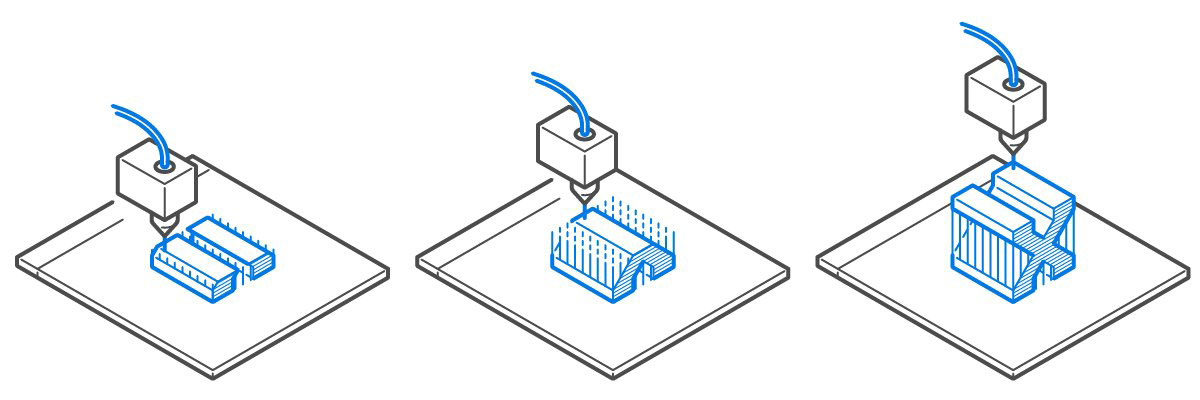
FDM is a quick and low-cost printing technology with the lowest resolution and accuracy. But still, it is most widely used during the year 2021 with 71% of consumers utilizing it in houses. This technology is used to get simple prototypes for basic proof-of-concept models.
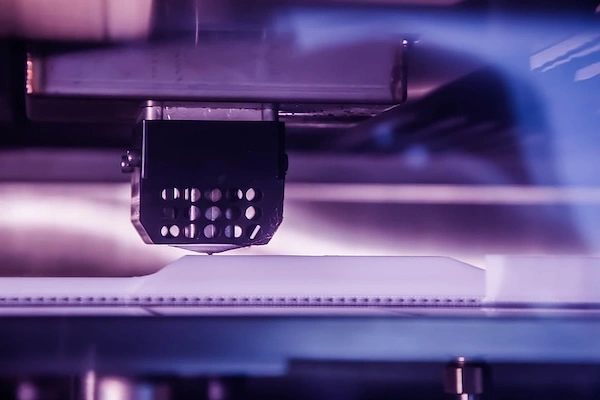
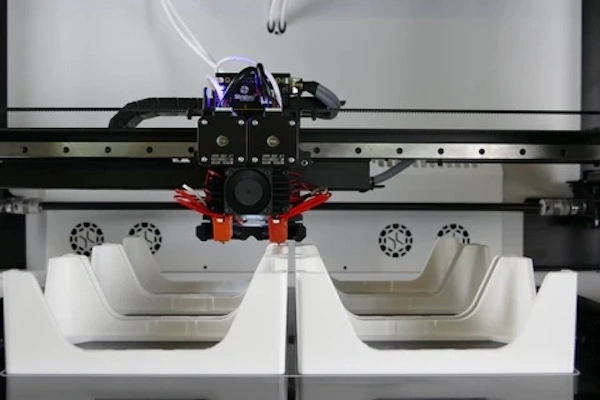
The FDM-based printers work on melting and extruding technology. The printers use thermoplastic filaments like polylactic acid. These filaments are heated and squeezed through the nozzle of the printer in liquid (melted) form. The melted liquid is cast gently layer by layer to form a sculpture.
2) Selective laser sintering (SLS)
Selective laser sintering (SLS) technology is popular for its high efficacy in making complex materials. It’s the second most widely used technology in the year 2021. It is an ideal choice for engineers to get functional prototypes at a low cost.
The technology works on sintering small parts of polymer powder into a solid structure. There is no need for any sort of anchoring material as the powder holds supporting properties. Nylon is the most commonly used thermoplastic in SLS technology. It bears excellent mechanical properties. Apart from this, it is easy to mold, lightweight and strong. Nylon is resistant to UV light, heat, dirt, water, and chemicals.
3) Stereolithography (SLA)
This technology is ideal for concept modelling, short-run production, functional and rapid prototyping, dental application, and in the jewellery industry. This is the most established and earliest form of 3D printing technology.
The SLA 3D works on a photopolymerization strategy. The technology in which a laser is used to cure the liquid into hardened plastic. The prototype produced as a result is highly accurate, watertight, and isotropic. Another benefit of this technology is a smooth finish with fine features. Stereolithography provides amazing mechanical, optical, and thermal properties.
6. Challenges in 3D Printing Process
Following the procedures mentioned above, one may believe that 3D printing is as simple as pressing the print button on a computer. A slew of stories in the news appears to guarantee the same thing. Unfortunately, this is no longer the case. The following are some of the areas where 3D printing varies from paper printing:
It is difficult to create useful 3D content. Though anyone can create a document for printing, creating 3D data requires the use of advanced design tools or scanning/digitizing devices. The capacity to utilize these goods entails training and money, which is out of reach for the typical customer.
Not everything in 3D is made identical. It does not mean that a 3D picture is printable because a 3D may be displayed on the computer screen. In addition to being particular, 3D printers need 3D data to comply with certain geometric limits.
So “middleware” software solutions are required, which receive input 3D data and turn it into 3D data, which can then be printed in 3D. The reuse of these systems calls for time and resources training and commitment.
7. Applications to 3d printing prototypes
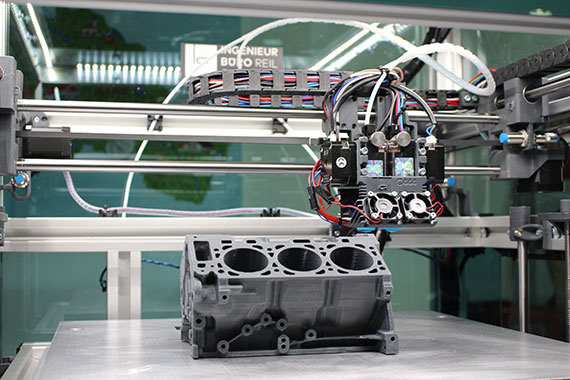
The 3D printing or additive manufacturing technology is amazing for crafting the three-dimensional parts or the whole object using CAD (Computer-aided design). The printer squeezes material layers over layer till the formation of an object or prototype.
Producing a 3D part is a multi-step process. The first step is the making of an architectural design which is usually done with a CAD model or 3D Scan data. Then the file is converted into a readable format like OBJ or STL.
Already installed software in the printer adjusts the orientation, size, height and dimension, layers of the 3D model before printing. The print is formed using laser technology to cure the liquid resin into hard plastic or by fusion of small polymer particles at high temperatures to solidify.
Uncured liquid resin or excessive powder polymer particles are cleaned as the printing is done. It is clean by rinsing in isopropyl alcohol, compressed air, or media blaster depending on the printing technology.
It began in the 1980s but advancement in technologies and software made it accessible for most of the industries, like Engineering, manufacturing, dentistry, healthcare, education, entertainment, jewellery, audiology, and other industries are getting benefit from 3D printing since it speeds up innovation and helps businesses.
1) Audiology
The 3D printing technology is used in the formation of high-quality and custom audio products like earplugs, earbuds, behind-the-ear hearing aids, and hearing protection. The printing requirement is higher and more consistent. Most importantly it is recommended by a hearing specialist.
Audio products like earbuds and soft silicone earmolds are the latest trends in the market. Digital printing services are now affordable to custom fit ear devices for audiology, consumer audiology industries, and noise pollution.
This digital technology is helping to produce accurate and consistent prints for clinics by reducing the peeling force during printing. 3D printing is low cost and provides rapid production. Along with this, the technology made it possible to print any sort or size of a prototype; either it is tiny earbuds or large earmoulds.
2) Manufacturing
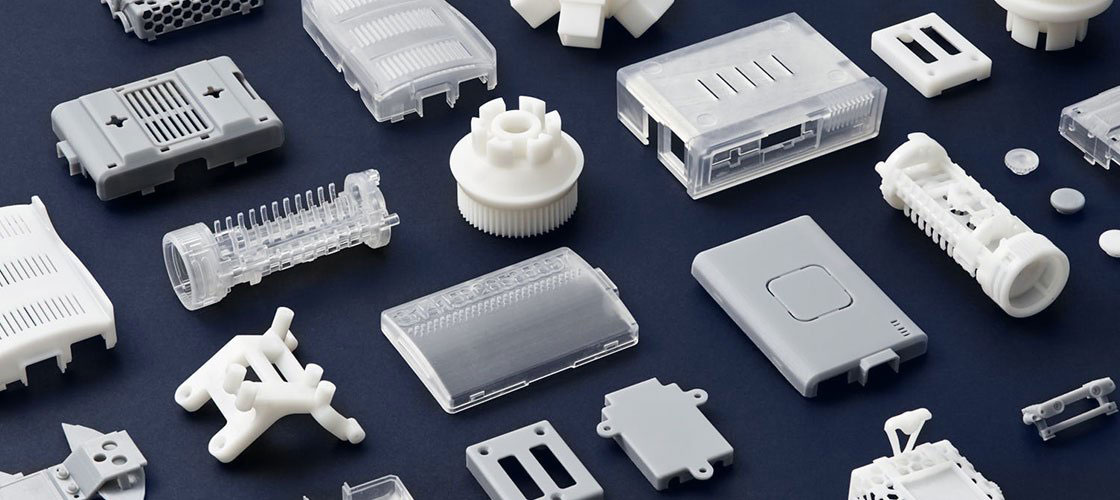
Advance 3D printing technology delivers a broad spectrum in applications of prototypes. These prototypes are high precision and functional, bearing the characteristic to be the final product or part. 3D printing prototypes fasten the efficacy by providing tools that make the production process better and save money and time.
There is a list of prototype applications in the manufacturing industry. Digital printing catalyzes production at almost every level. Metal casting, molding, tooling, jig and fixtures, short-run production, and mass customization are some of the services of digital printing in this field.
3) Engineering and Product Design
Rapid prototyping and design for manufacturing or design for assembling technologies are uplifting the industry of engineering.
DFM: Design for manufacturing (DFM) or design for assembly (DFA) technology provides ready to manufacture and assemble products by turning the specifications like geometrics, feature requirements, and mechanism, during the process.
This technology benefits the engineers in terms of speed, insignificant scrap rates, low part cost, and minimizing tools. Reliability is the key feature for the manufacturer using this tech.
Rapid Prototyping: The technique involved in creating a scale model of physical parts quickly is rapid prototyping. Rapid prototyping uses an additive fabrication technique that doesn’t require tooling. It provides instant models of the concept in no time, allowing the creators to visualize beyond imagination.
Sharing of ideas has become easy by showing them into realistic forms of conceptual models. Concept models aids in the identification of the flaws, and refinement of the models by clients, before production.
The multi-step process of production is now easy with this technology. The prototype can be evaluated at every stage to build a sharply define desired object.
4) Education
3D printers present learners the professional-level technology and creativity. The printing technology encourages advanced learning and helps students in research. STEAM curricula in design, arts, science and engineering now adopt digital printing services to make the learning experiences better.
Custom research setups, fab labs and mark spaces, Models for STEM curricula are the application of 3D printing services in the field of education.
5) Jewelry
The beautiful, elegant, and sharp-featured designs, in a short period with a variety of materials, are possible because of 3D printing services.
Fitting pieces of jewellery, creating master patterns for rubber molding, and lost wax casting are the digital applications in the jewellery industry. The application of this service in the field makes it convenient to print batches within a few hours.
The exceptional feature of 3D printing is it molds your choice into the desired prototype. What design you want, what size you think of, and what material you aspire, It’s all up to you. Nylon, paper, metal glass, ceramics, diamond, plethora, and all crude materials are choices for you.
Whether it’s a fine fabricated design or a micro-size product, you can get this with 3D printing technology. Which is sometimes not possible with traditional manufacturing? 3D printing also allows you to make new choices like ceramic jewellery.
6) Entertainment
Props, hyper-realistic sculptures, and character models are 3D printing prototypes. These applications are filmed in stop-motion movies, bespoke costumes, and video games. The digital printing service portrays high-definition models, which are also used for special effects in movies.
7) Dental Industry
Dentures, crown and bridges models, patterns for casting and pressing, clear aligner, Hawley retainer models, splints and occlusal guides, surgical guides are the applications of digital printing in the dental industry.

Leave A Comment