
This paper presents the key categories of injection molding machines, how they operate, and when to apply them. It is capable of assisting you in gauging supplier suggestions and production fit.
1. The Fundamental Working Principle of an Injection Molding Machine
Each injection molding machine performs the same general task. They heat the plastic, pour it into a mold, apply pressure on the mold, allow it to cool down, and then squeeze the part off. The cycle is comparable to machine types. The difference is in the manner in which the machine generates motion and force.
This is important to you since machine design does not simply influence mere output. It may influence the process control, repeatability, energy consumption, and the suitability of the machine to a particular mold or product. Motion in electric machines is provided by a servo. The hydraulic machines are based on hydraulic force. In various ways, hybrid machines are mixed together.
2. The Major Types of Injection Molding Machines
There are mainly three types of injection molding machines: hydraulic, in which clamping force and injection power are generated through hydraulic systems; electric, in which those operations are generated through electric servometers; and hybrid, which uses both approaches in the same machine. Knowing the differences between these types could help buyers evaluate suggestions from suppliers and consider production needs more rationally.
1)Hydraulic Injection Molding Machines
To evaluate if this machine fits your project, we will break down its mechanics, key characteristics, ideal use cases, and the strategic implications of choosing this technology.
-
How It Works
Hydraulic injection molding machines use hydraulic systems to generate clamping force and injection power. In layman’s terms, how it works, the pressurized hydraulic fluid drives the machine’s movements and generates the force needed for molding.
This concept of machine drive has been commonly used in the injection molding industry for many years because it can support strong force output and a broad range of molding requirements. Compared with other machine types, hydraulic machines rely on hydraulic power rather than direct electric servo control to generate the main machine actions.
-
Key Characteristics
The most prominent characteristic of a hydraulic machine is its force capability and process flexibility. It is commonly associated with strong production, a broader processing range, and the ability to handle demanding molds and larger parts.
Hydraulic machines are often seen as the practical workhorse of the molding production. Its value is not that it is the newest option, but the one capable of supporting many common molding applications with robust and flexible machine performance. That said, this kind of machine is especially relevant to projects that need strong force and broad process flexibility rather than an optimized machine design for high repeatability, cleanroom-sensitive production, or very precise electric-axis control.
-
When to Use It
Hydraulic machines are commonly used for larger parties, demanding molds and applications that need strong force and broad process flexibility. The use of the machine is also practical when a project requires strong molding capability that can be used through a variety of jobs, instead of a machine mainly aimed at using high repeatability, cleanroom-sensitive production, or very precise electric-axis control.
In many cases, hydraulic machines are a sensible choice when the production challenge is more or less about the force, mold demand, broad operating range, and less about ultra-clean and/or extremely control-sensitive processing.
-
Buying Considerations
Choosing a hydraulic machine is often a clear sign that the focus is on force capability, mold compatibility, and maximum production flexibility. You may also think about this recommendation as the part and/or its mold place stronger machine demand on the hydraulic side of processing, especially if a challenge on a project is related to clamping force or broader machine process support.
This doesn’t mean that the machine is “old-fashioned” or “outdated,” or in any way less capable. In this case, it should mean that the project likely benefits more from hydraulic strength and/or broad process range, rather than the tighter motion control associated with an electric system.
2) Electric Injection Molding Machines
To evaluate if this machine fits your project, we will break down its mechanics, key characteristics, ideal use cases, and the strategic implications of choosing this technology.
-
How It Works
Electric injection molding machines are used. Servo motors and servo motion-driving drives that use electrically driven motion to directly control the injection, clamping, and other movements within the machine.
The design allows the injection molding machine to show more precise motion control, as well as more stable repeatability. Because the movement is controlled through electrically driven motion, this type of machine can also be better suited to specific application cases with controlled motion and consistent performance requirements.
-
Key Characteristics
The main characteristic of an electric machine is motion control. Electric machines are usually associated with high repeatability, accurate positioning, stable process conditions, lower noise, and cleaner machine operation.
They are also often chosen for special applications where process consistency is especially important. Compared with hydraulic machines, electric machines are more closely linked to precision-driven production, because their operating design enables tighter control over the machine movement.
-
When to Use It
Electric machines use electric drivers for all critical functions such as injection, ejection, clamping, pressure control, and temperature control. Electrical control and drive are usually done using ac/dc motor systems, motor controls, and related components. Some include variable frequency drives and motion control systems.
Electric machines are commonly recommended for precision parts, medical parts, electronics, or any part where repeatability, controlled movement, or clean operation are important. Because process performance and dimensional consistency matter more than broad-based force-oriented capabilities, electric machines are most useful for applications where those things are the most important. If the production target is heavily precision- and process-based, repeatability-sensitive, or clean-operation reliant, electric is usually the machine type most worthy to consider first.
-
Buying Considerations
When your project prioritizes consistency, controlled movement, and process stability, an electric machine is typically the recommended choice. It also typically means a part with tighter quality expectations, more demanding repeating qualities, or more demanding production environments where clean operation matters. In practice, this means the project is unlikely to be as tolerant of variation. If they’re considering an electric for the solution, they should be able to explain how they believe that choice supports the required precision, consistency, or production conditions.
3) Hybrid Injection Molding Machines
To evaluate if this machine fits your project, we will break down its mechanics, key characteristics, ideal use cases, and the strategic implications of choosing this technology.
-
How it works
Hybrid injection molding machines are machines that combine electric and hydraulic concepts in one machine. Rather than using pure, single-drive methods across the entire machine, hybrid machines utilize electric drives in areas of the mechanism where precision and speed matter most. Where force, machine layout, and broader machine operating support matter more, they depend on hydraulic support instead. This is where they differ most from either all-electric or all-hydraulic machines, and where it’s intended to benefit the most. The purpose of the design choice is not to use one or the other, but to optimize for the strength of one at one point and the other at another.
-
Key characteristics
The main characteristic of a hybrid machine is balance. It is intended to offer more refined control than an all-hypothetical machine in key functions while still maintaining the benefit of hydraulic backup where it is needed.
This part could cover many topics—some people talk about hybrid as being more control-oriented than hydraulic, while others talk about it as more force-rich than electric—but they are very different concepts, which is why they matter in distinct ways. If one views a purely hydraulic, purely electrifying, or hybrid choice as being a purely control or force-based decision, it is an error. Any of the three can be a control-dominated or force-dominated answer based on the needs of the application.
-
When to Use It
It’s the most difficult question to answer from the perspective of a machine supplier or consultant. There are multiple things to think about. Maybe the supplier prefers hybrid machines for their own reasons, like a preference for using electric and hydraulic parts in the same application. Maybe the machine’s design combines both elements to meet a need that neither electric nor hydraulic alone would meet.
For example, a hybrid may be suggested for use with an electric machine when the part requires tighter process control than that machine offers but still needs more force from its support system than an electric would provide. Many companies find hybrid to be attractive in either hybrid situation, so the machine’s ability to combine the benefits of each is appealing.
It may be easier for you to understand why a machine should be hybrid based on the degree of control or support that it offers over just electric or hydraulic alone. A simple starting point is that a hybrid recommendation usually suggests that the project has more balanced or mixed requirements—say, the supplier needs stronger support than a purely electric machine offers in some functions, while still needing more control than a purely hydraulic machine would typically give.
If you find that situation to be true, then a hybrid may help the supplier meet those needs in ways that they can’t do with an electric or hydraulic machine alone. That’s where a buyer should consider its use. This does not describe when a hybrid is always the best option, so an electric or hydraulic-only supplier may also say it’s a better fit.
-
Buying Considerations
Seeing a hybrid machine recommended usually means that the project stands to benefit from its unique balance of power and precision. To understand that perspective, a buyer should usually ask how and where that benefit would take place in a combination.
In particular, can the benefits of electricity be met by an electric machine on its own? Could the benefits of hydraulic be achieved by a fully hydraulic system? If the answer is no in either case, it is more likely that the supplier believes the project needs a hybrid because of a need to balance the different strengths of the options.
You should also consider your own needs. Does the project need a higher or lower control level than the electric or hydraulic machine could offer alone? Does it require more or less support than hydraulic or electric machines can provide? If so, a hybrid answer could apply regardless of what an electric or a solely hydraulic option might cost or meet.
It may also mean that the company should consider other solutions, such as a specialized electric machine or a different class of electric machine. This does not replace the ability to think around these questions: they were identified as a major concern for buyers to avoid making the wrong choice when they were first asked.
By considering this question while also identifying their own needs, you can easily see when a hybrid recommendation makes sense or when it is best to stick with a different type of machine. As with all questions like this, it is best for a buyer to identify what will occur in their business and why an additional or different machine is required.
4) A quick comparison of the three main types.
| Machine Type | How It Works | Main Strength | Typical Use |
|---|---|---|---|
| Hydraulic | Uses hydraulic systems to generate clamping force and injection power | Strong force and broad process flexibility | Large parts, demanding molds, and applications that need broad molding capability |
| Electric | Uses servo motors and servo drives to control machine movement directly | High precision, repeatability, and clean operation | Medical parts, electronics, and other precision-driven applications |
| Hybrid | Combines electric and hydraulic systems in one machine | Balanced control and force capability | Applications that need both precise control and hydraulic support |
3. Selection of the appropriate Injection Molding Machine on a project
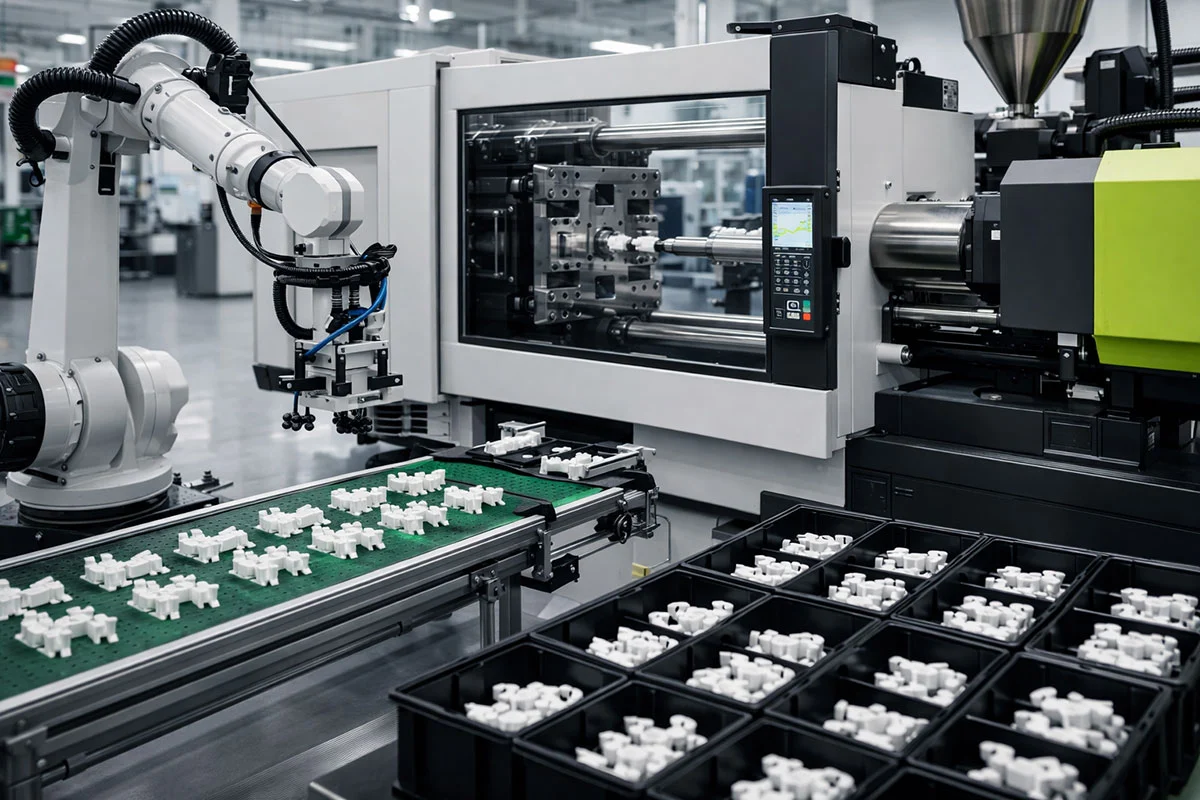
Start with the part. The size of parts, the size of shots, the requirements of the molds, and the volume of production are all variables that influence the type of machine that is reasonable. When the part is larger, or the mold requires higher coverage in the clamping-force, then that can push the project in the direction of machine families designed with a greater force range and more process flexibility. ENGEL, as well as an example, has hydraulic, hybrid, and electric platforms at various levels of clamping-force, which indicates the dependence of machine selection on the requirements of the application.
Then consider the target of quality. When your component requires high repeat, stability, or a cleaner production process, then electric or hybrid might be a more appropriate choice. In case the process is more flexible, uses more force, or is more compatible with broad moulding, then hydraulic can be a more suitable choice. It does not really matter which machine sounds better. The trick is which machine will serve the purpose of the actual production goal better.
It also serves to examine the application itself. Not all of the medical parts, electronics, insert- overmolded parts, or larger technical components are pointing to the same machine choice. It is due to this reason that one supplier can suggest electric in one project and hydraulic or hybrid in another without the slightest contradiction. The part, the mold, and the production target are not the same, and therefore, the machine logic is also not the same.
Ask a couple of easy questions when you are assessing a supplier. What type of machine is to be used? Why does it fit the part? Is it the decision of precision, force, cleanliness, efficiency, or insert-handling? An effective supplier must be capable of responding to these in a straightforward manner without the use of imprecise marketing words.
| What to look at in your project | Machine Type to Consider First | Why |
|---|---|---|
| Larger parts or molds that need a higher clamping force | Hydraulic | Better suited to applications that need a stronger force and broader process flexibility |
| High repeatability and stable process control | Electric | Better motion control helps support consistency and precision |
| Cleanroom-sensitive or cleanliness-focused production | Electric | Clean operation makes it more suitable for these applications |
| Projects that need both force capability and tighter control | Hybrid | Combines hydraulic support with electric precision |
| Applications with broader molding flexibility needs | Hydraulic | Well-suited to a wide range of molding requirements |
| Different production demands that may not be best served by one machine concept alone | Hybrid | Offers a more balanced solution when both control and force matter |
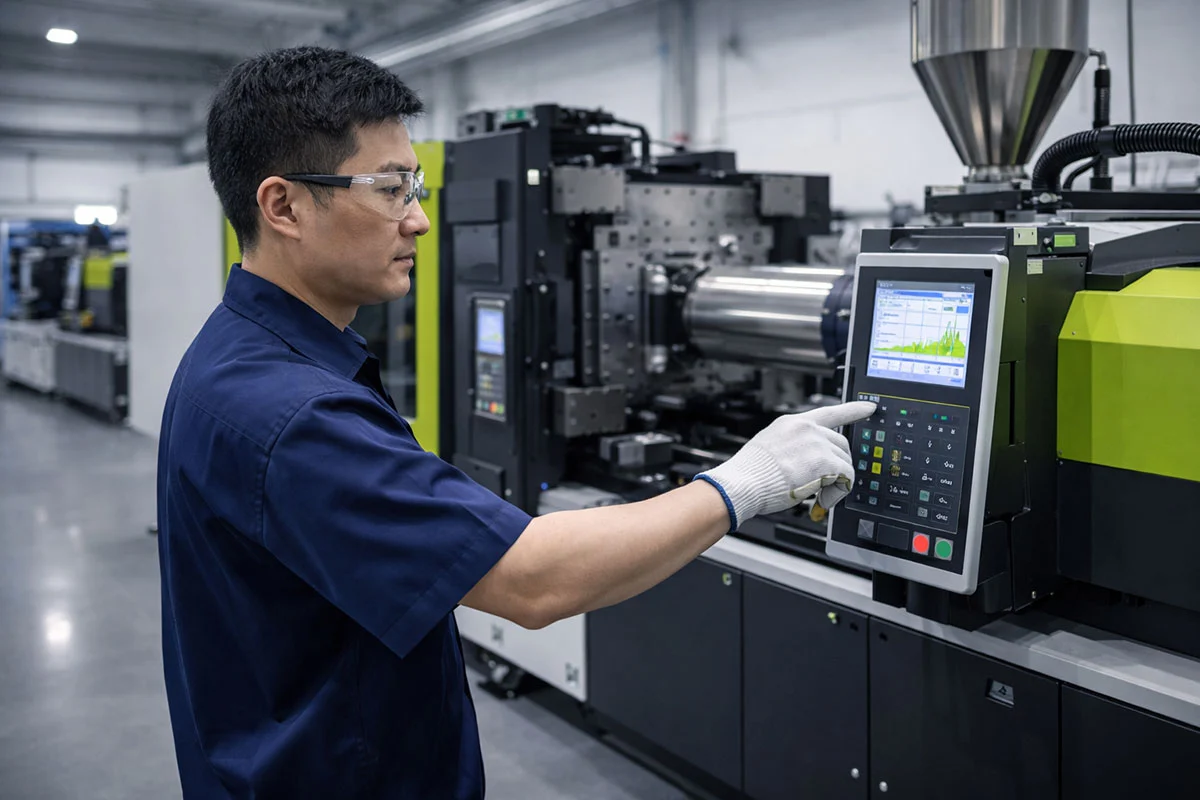
In practice, machine selection also depends on how the supplier controls the process on the shop floor.
4. The most prevalent misunderstandings about types of injection molding machines
A misconception is that a more advanced machine is an automatic connotation of a better part. In actual manufacturing, the quality of parts is reliant on the entire process, such as the quality of the mold, the behavior of the material, the setup of the process, and the capability of the machine to work together. The machine is important, but does not have the final say on its own.
The other misconception is that electric machines are necessarily the best ones. Electric machines excel at accuracy, consistency, and cleanliness, but this does not imply that all projects are benefiting sufficiently to warrant the strengths in order to make them the most appropriate. There are some components that are more fit to hydraulic or hybrid.
Hybrid machines are wrongly understood as well. Naturally, some purchasers have a hybrid as the Manhattan Project or the safest solution by default. It is not appropriate to judge it that way. A hybrid is useful in cases when both electric and hydraulic strengths are actually useful in the process. Seeing that, unless absolutely necessary, the mixed design will merely complicate the situation, without providing significant practical value.
5. Conclusion
Hydraulic, electric, and hybrid injection molding machines have definite advantages. The correct decision to make is based on your part needs, your production objectives, and the amount of accuracy, force, and efficiency the work requires.
To you, the important thing is not all about knowing the type of machine, but why that machine is suitable for the application. Once you are able to relate machine selection to product requirements, your negotiations with suppliers can be quite a bit more realistic and productive.

Leave A Comment