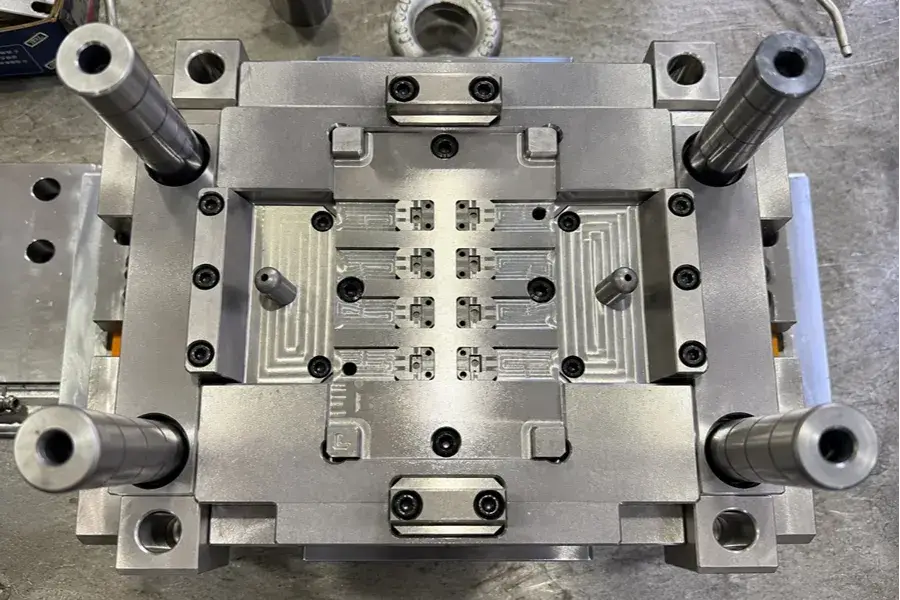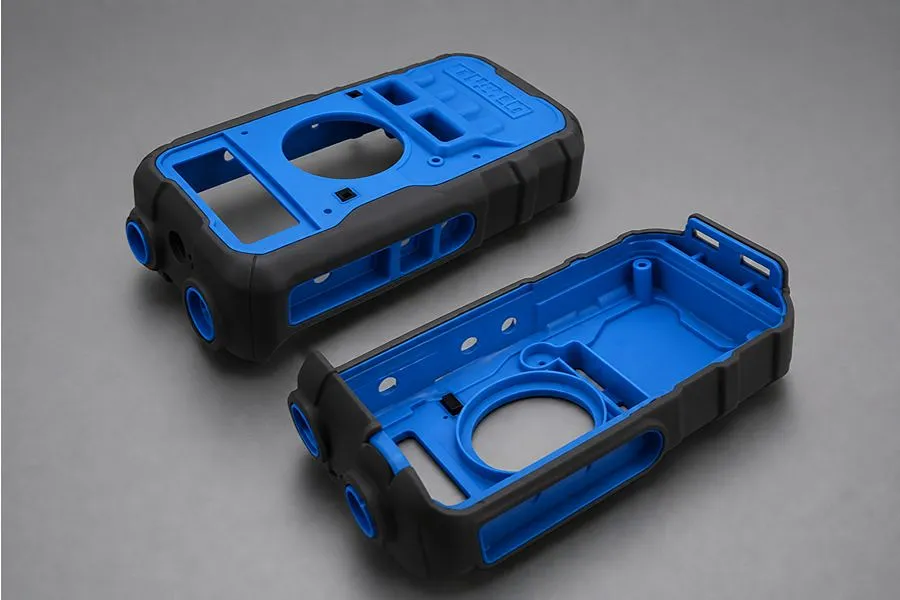
In injection molding projects, should you choose a steel mold or an aluminum mold? Is it necessary to invest in a steel mold during the product development stage? If the expected production volume is only tens of thousands of parts, is a steel mold too expensive? If demand increases rapidly after product launch, can the original aluminum mold continue supporting mass production?
When evaluating a mold solution, consider the projected production volume, plastic material, part geometry, surface finish requirements, lead time, and long-term maintenance costs. A lower tooling price does not necessarily reduce the overall project cost, and a longer mold life is not always the best choice for every application. This article compares steel and aluminum molds in terms of performance, cost, application scenarios, common selection mistakes, and real production cases to help product development, procurement, and manufacturing teams choose the most suitable tooling solution.
1. Performance Comparison Between Steel and Aluminum Molds
Before comparing the two mold types, let’s first examine their key characteristics in terms of material properties, service life, and surface finishing.
1) Characteristics of Steel Molds
Injection molds are typically manufactured from either pre-hardened tool steels, such as P20, 718H, and NAK80, or hardened tool steels, such as H13 and S136 stainless steel. After forging, heat treatment, and precision machining, these materials provide a stable foundation for long-term mass production.
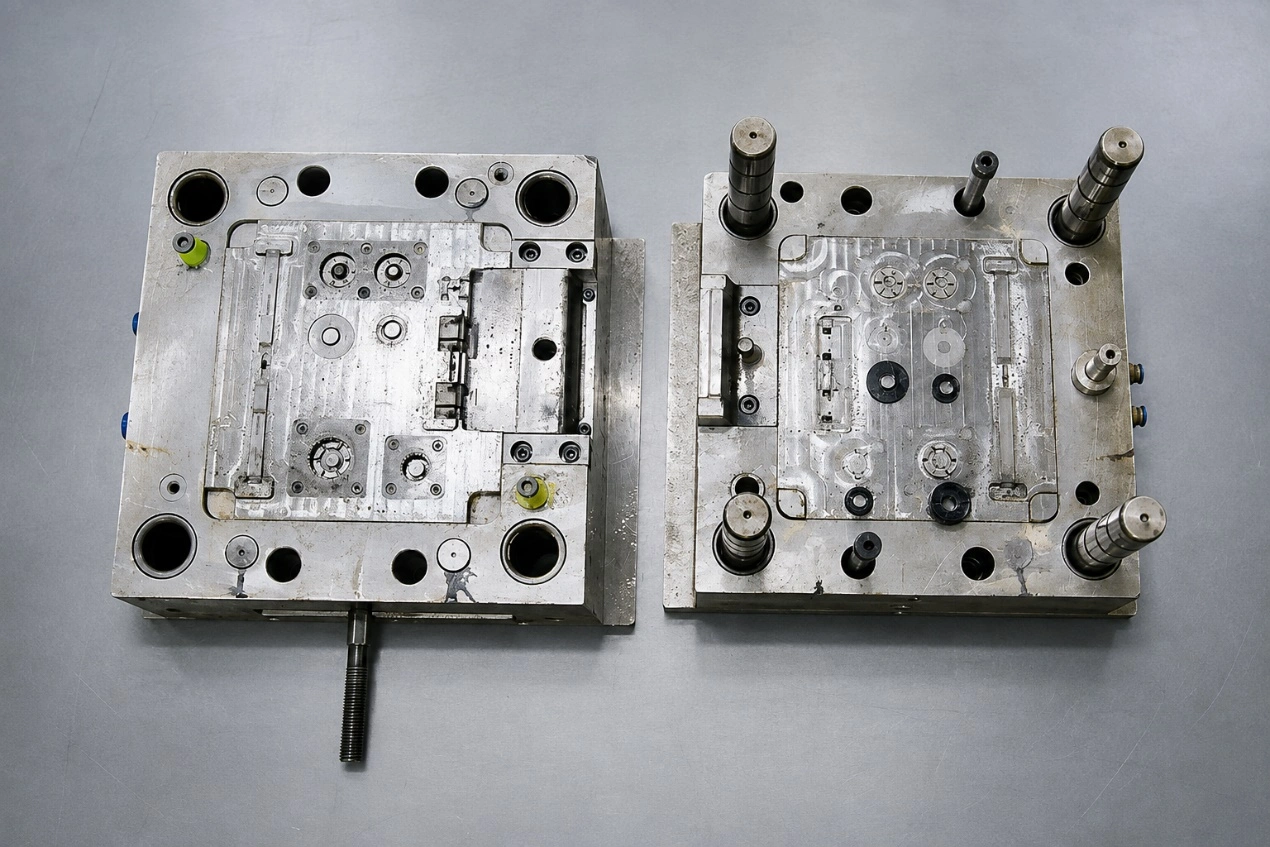
Steel Mold
a) High Hardness and Excellent Wear Resistance
Pre-hardened steels typically have a hardness of HRC 28–40 when supplied, while hardened steels reach HRC 48–52 after quenching and tempering. Their hardness is more than three times that of a 7075 aluminum mold. When molding glass-fiber-reinforced plastics such as PA66+GF and PPS, steel molds withstand continuous erosion from high-pressure molten resin and glass fibers while maintaining cavity accuracy over millions of cycles. This significantly reduces flash and dimensional variation caused by wear.
b) Good Corrosion Resistance and Dimensional Stability
S136 stainless steel contains a high chromium content, providing excellent resistance to acidic gases released during the processing of materials such as PVC and flame-retardant ABS. Compared with aluminum alloys, steel has a lower coefficient of thermal expansion, making it less susceptible to thermal distortion during prolonged high-temperature production cycles.
c) Suitable for High-Quality Surface Finishes
Steel molds support SPI A1 mirror polishing, precision texture etching, and high-gloss surface finishing. The polished surface also offers excellent wear resistance, making it less likely to lose gloss, develop haze, or become scratched during long production runs. As a result, steel molds are better suited for transparent parts, optical components, and products with demanding cosmetic requirements.
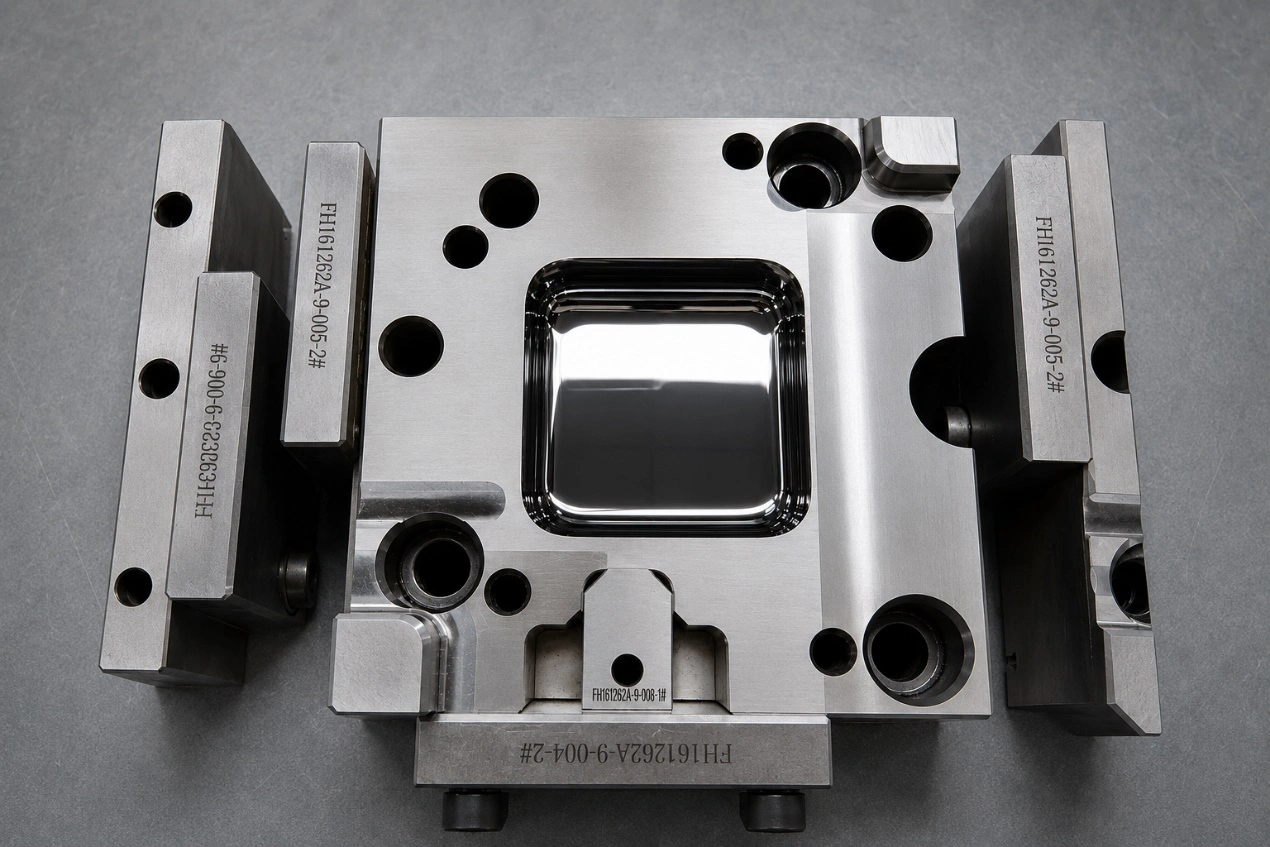
Mirror Finish of a Steel Mold
d) High Repairability for Long-Term Mass Production
The typical manufacturing process for a steel mold includes CNC rough machining, heat treatment, precision grinding, high-speed CNC finishing, EDM or wire cutting, and polishing. Standard lead time is generally 6–12 weeks. Although production takes longer, worn cavities, slides, and inserts can be repaired by TIG welding, laser welding, and repolishing. Repair costs are usually only a small fraction of the cost of building a new mold, resulting in lower long-term maintenance costs.
2) Characteristics of Aluminum Molds
Injection aluminum molds are typically manufactured from high-strength mold aluminum alloys such as 7075-T6, QC-10, and ALUMOLD. These materials offer excellent thermal conductivity and machining performance.
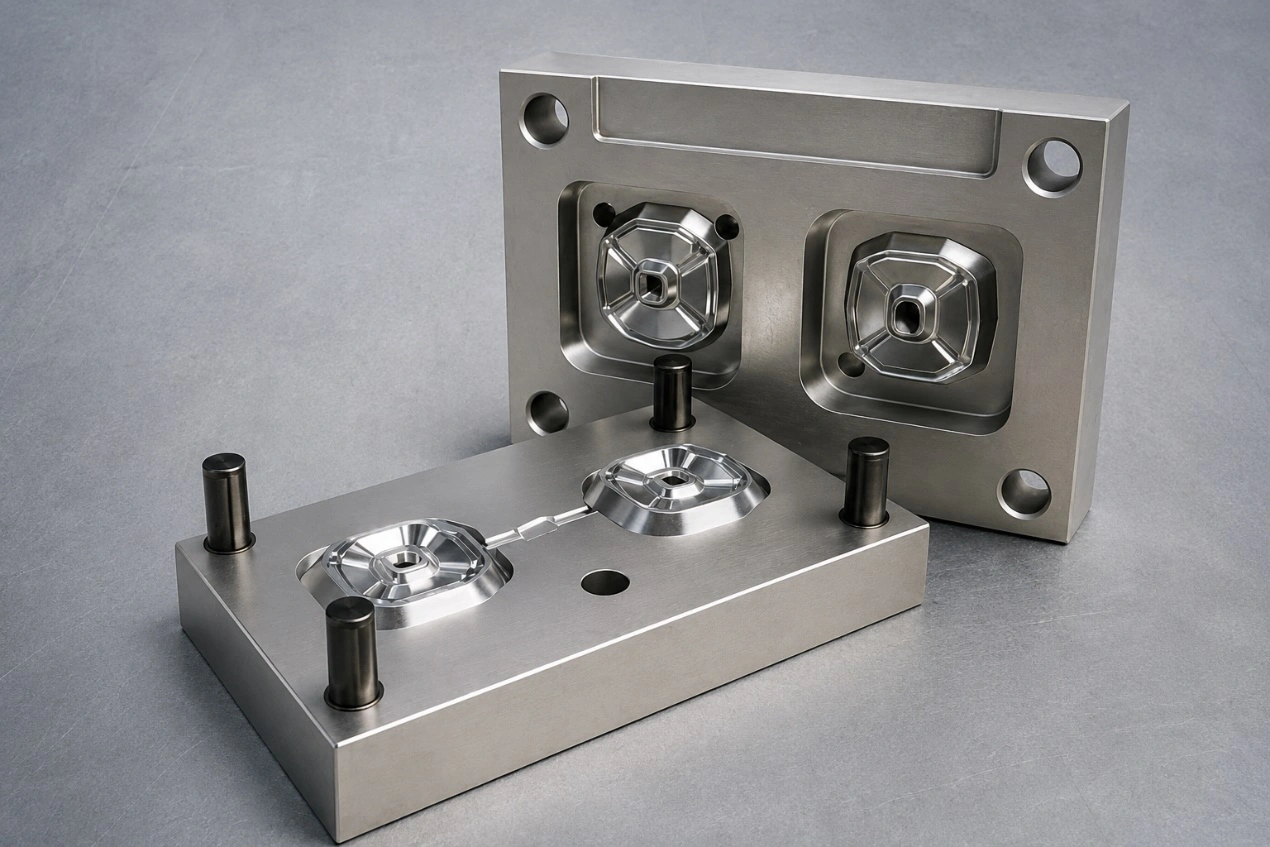
Aluminum Mold
a) Excellent Thermal Conductivity and Higher Molding Efficiency
Aluminum alloys have a thermal conductivity of approximately 160–200 W/m·K, which is 5–8 times higher than conventional mold steel. For parts with uniform wall thickness, this can shorten cooling time by 15%–30%.
b) Faster Machining and Shorter Lead Time
Aluminum machines much faster than steel. CNC machining efficiency is typically three to five times higher, and no heat treatment is required. As a result, total machining time is only 40%–60% of that required for a steel mold. Standard lead time is generally 2–5 weeks, allowing rapid product validation and pilot production.
c) Limited Wear and Corrosion Resistance
Aluminum alloys gain strength mainly through age hardening and cannot achieve the same surface hardness as tool steel through quenching. During prolonged molding of glass-fiber-reinforced plastics, PVC, or flame-retardant materials, the cavity can develop scratches, pitting, and surface wear from glass-fiber erosion and acidic gas corrosion. The mold also has difficulty maintaining a mirror-polished finish over long production runs.
d) Limited Repairability
Aluminum molds can be repaired by laser welding or TIG welding, but the repaired area is usually softer and less wear-resistant than the original material. This increases the risk of repeated wear. When the cavity suffers extensive wear or profile distortion, repair is often uneconomical and the mold may need to be rebuilt.
3) Key Differences Between Steel and Aluminum Molds
The following comparison is based on a single-cavity appliance housing mold under standard injection molding conditions. The aluminum mold uses 7075-T6, while the steel molds use P20 pre-hardened steel and H13/S136 hardened steel.
| Comparison Item | 7075-T6 Aluminum Mold | P20 Pre-Hardened Steel Mold | H13/S136 Hardened Steel Mold | Practical Engineering Impact |
| Base Material Hardness | HB 70–150 | HRC 28–32 | HRC 48–52 | Aluminum has lower wear resistance. Hardened steel is better suited for glass-fiber-reinforced materials and high-pressure molding. |
| Thermal Conductivity (W/m·K) | 180 | 35 | 30 | Aluminum cools faster and can shorten molding cycles by 15%–30%. |
| Standard Lead Time | 2–5 weeks | 6–8 weeks | 8–12 weeks | Aluminum supports rapid development, while steel is better suited for long-term mass production. |
| Maximum Stable Surface Finish | SPI B matte | SPI A2 high gloss | SPI A1 mirror finish | Steel is preferred for high-gloss, transparent, and optical parts. |
| Resistance to Glass-Fiber Wear | Poor; obvious wear may begin after about 10,000–30,000 cycles | Moderate | Excellent | Hardened steel is recommended for PA66+GF, PPS, and similar materials. |
| Corrosion Resistance for PVC / Flame-Retardant Plastics | Poor | Moderate | Excellent, especially S136 | S136 stainless steel molds are preferred for corrosive materials. |
| Weld Repair Capability | Moderate; repaired areas lose wear resistance | Good | Excellent | Steel molds are more suitable for long-term repair and repeated reuse. |
2. Cost Differences Between Steel and Aluminum Molds
Mold cost should not be assessed only by comparing the initial tooling quotations. A proper evaluation should consider total cost of ownership over the full lifecycle, including initial manufacturing cost, unit production cost, later maintenance, repairs, and losses caused by downtime. The cost advantage of each mold type changes with project volume.
1) Comparison of Initial Mold Manufacturing Costs
a) Material Procurement Cost
7075 mold-grade aluminum plate costs about three to four times as much as P20 steel per unit weight. However, aluminum has lower cutting resistance, causes less tool wear, and requires much less machining time. It also eliminates the cost of heat treatment, dimensional correction, and secondary finishing. For a single-cavity mold of the same complexity, the total price of an aluminum mold is typically only 60%–80% of that of a steel mold, reducing the project’s initial capital investment.
b) Breakdown of Machining Time Costs
A standard appliance housing steel mold typically follows this process: CNC rough machining → heat treatment by quenching and tempering → precision grinding and correction → high-speed CNC finishing → EDM / wire cutting → polishing. Total machining time is approximately 180–240 hours;
An aluminum mold typically requires only integrated CNC machining followed by polishing, with no heat treatment. Total machining time is about 70–110 hours, reducing labor and machine depreciation costs by more than 40%.
c) Cost Difference for Design Changes
During product development, engineers often modify the geometry, wall thickness, and gate location. Aluminum is easier to machine, so minor changes take less time and cost less. However, if the cavity develops extensive wear or profile distortion, an aluminum mold may be beyond repair and require complete replacement, resulting in a high scrapping cost. Steel molds allow localized welding and grinding. They can be modified and repaired repeatedly at a lower cost per repair.
2) Comparison of Unit Production Cost
The difference in unit cost between steel and aluminum molds mainly comes from the molding cycle rather than the plastic material itself.
a) Short-Term Unit Cost Advantage of Aluminum Molds
The high thermal conductivity of aluminum significantly reduces cooling time. For one ABS consumer electronics housing, the steel mold required a 62-second cycle, while the 7075 aluminum mold required only 41 seconds. The cycle time dropped by 21 seconds, and cooling time decreased by 34%. Equipment power consumption and operator labor allocated to each part also fell by 18%–28%.
b) Hidden Increase in Unit Cost During High-Volume Production
An aluminum mold can normally provide stable production for up to 500,000 cycles. If the total project demand reaches 800,000 parts and the cavity wears out after 450,000 cycles, the project must fund a second mold. Spreading the cost of two molds across the total production volume doubles the tooling cost per part and may make the aluminum solution more expensive than a steel mold.
3) Long-Term Maintenance Cost and Lifecycle Cost Analysis
a) Routine Maintenance and Inspection Cost
Because aluminum has lower hardness, the parting line, gate, slide interfaces, and other contact surfaces wear faster. Aluminum molds normally require maintenance every 50,000–80,000 cycles, including disassembly, polishing, and replacement of worn inserts. Steel molds can often run more than 150,000 cycles between maintenance intervals, and their annual labor and spare-part costs are generally about 40% of those for aluminum molds.
b) Scrap and Production Downtime Losses (The Main Hidden Lifecycle Cost)
In high-volume production, the initial price advantage of an aluminum mold can be fully offset by the cost of a replacement mold and production downtime. The resulting total cost can be much higher than that of a steel mold.
3. Application Scenarios for Steel and Aluminum Molds
Neither steel nor aluminum is universally better. The correct choice depends on whether the mold matches the project requirements. Expected production volume, product maturity, plastic material, delivery schedule, and budget all affect the final decision.
1) Suitable Applications for Aluminum Molds (Recommended Only for Low- to Medium-Volume, Low-Wear Requirements)
Product development prototypes and low-volume market trials, with total production of 10,000–300,000 parts;
General-purpose, non-glass-fiber, low-corrosion plastics such as PP, ABS, and PS;
Products requiring only matte or textured surfaces, with no mirror, optical, or high-polish finish requirements;
Projects with tight schedules that require mold delivery within 2–4 weeks;
Large thin-wall housings that use aluminum’s high thermal conductivity to shorten molding cycles and reduce unit production cost.
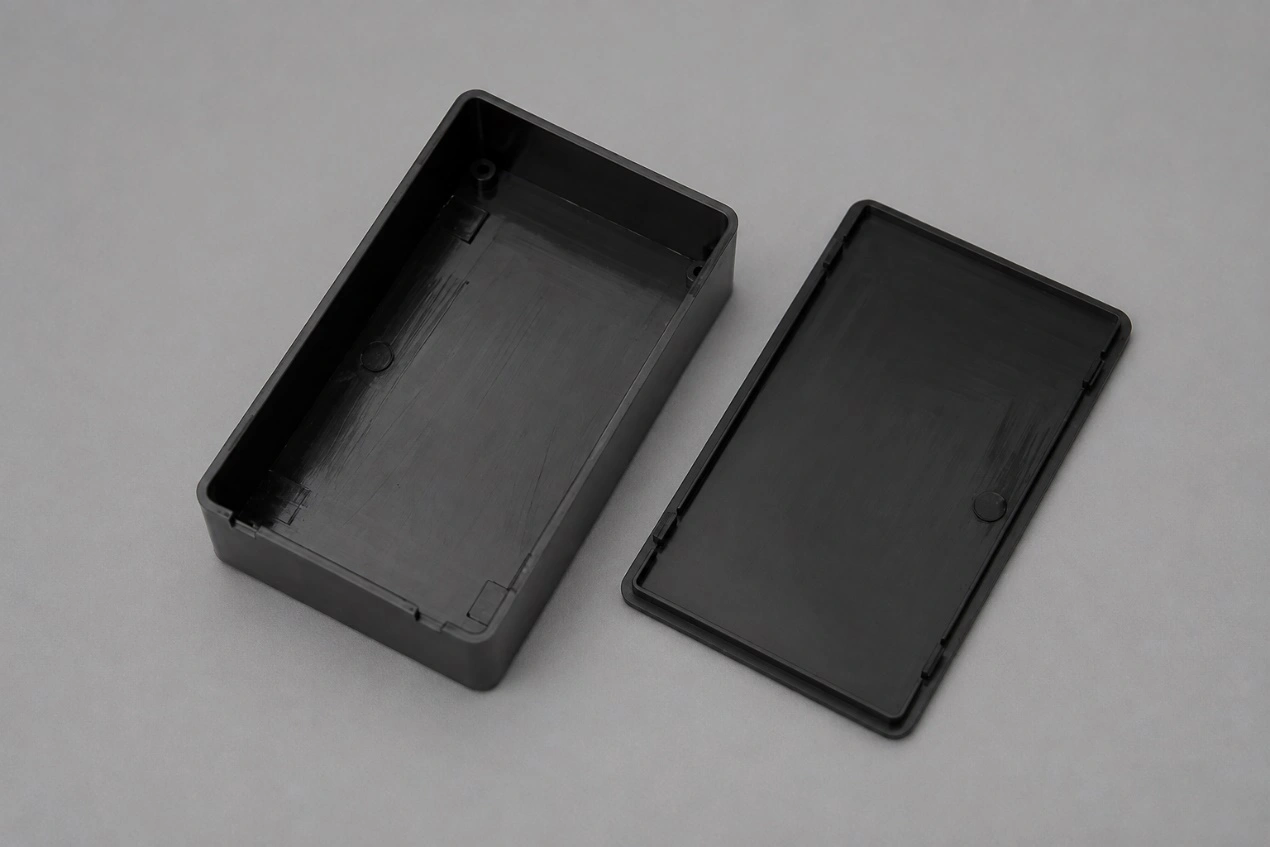
Aluminum Mold Application
2) Suitable Applications for Pre-Hardened Steel Molds (P20/718H)
Medium-volume production, with total output of 300,000–800,000 parts;
Standard consumer electronics and appliance housings requiring high-gloss or fine matte finishes;
Non-glass-fiber or low-glass-fiber plastics without highly corrosive PVC materials;
Products with clips, ribs, and other fine features that require stable dimensions over long production runs.
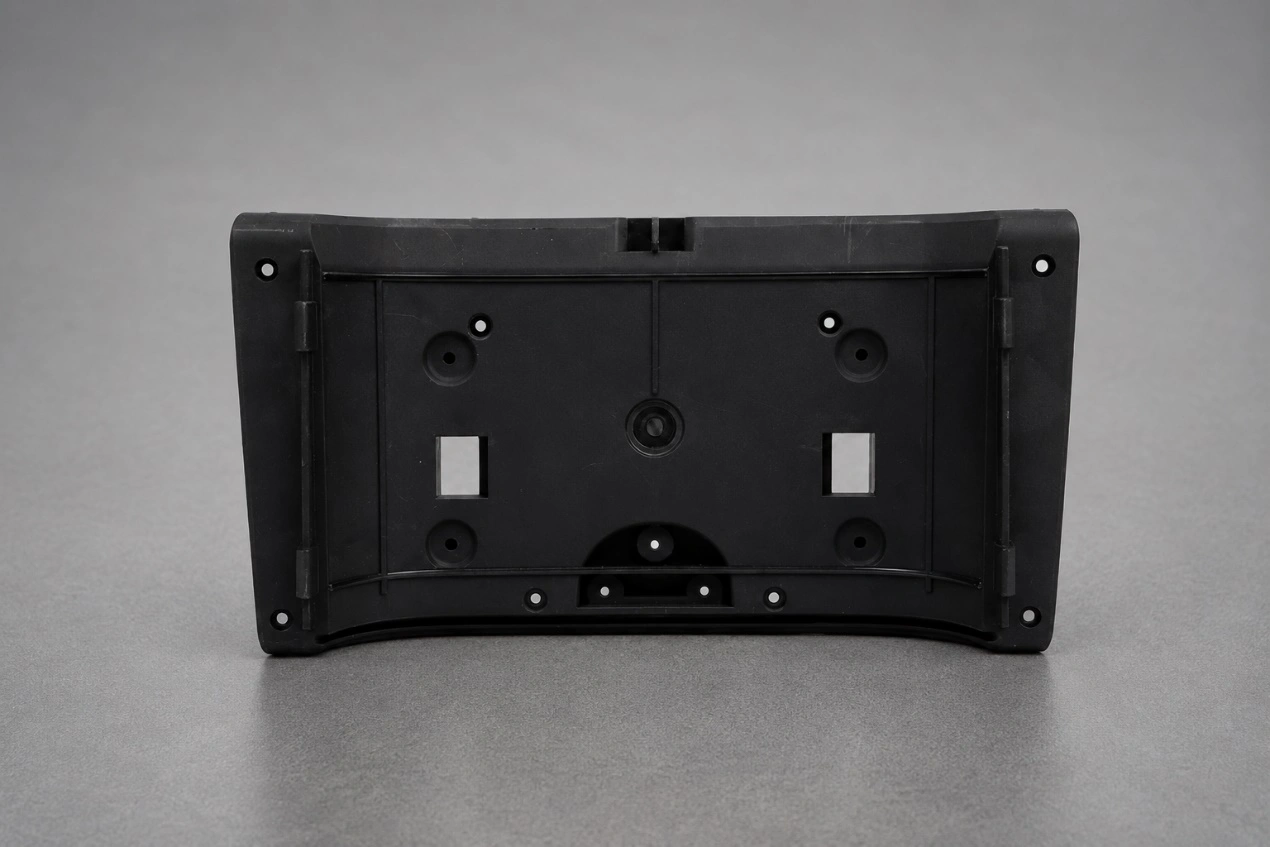
Steel Mold Application
3) Suitable Applications for Hardened Steel Molds (H13/S136)
Stable high-volume production above 800,000 parts, including million-cycle programs;
Wear-resistant glass-fiber-reinforced plastics such as PA66+GF, PPS, and PEEK, as well as PVC and highly flame-retardant corrosive plastics;
Optical lenses, premium cosmetic housings, and mirror-finish automotive interior parts requiring an SPI A1 mirror polish;
Molds with many slides, lifters, fine threads, and other mechanisms subjected to repeated core pulling and high-pressure injection;
Medical products and automotive safety components with tight dimensional tolerances, where dimensional drift must remain within 0.03 mm over one million cycles.
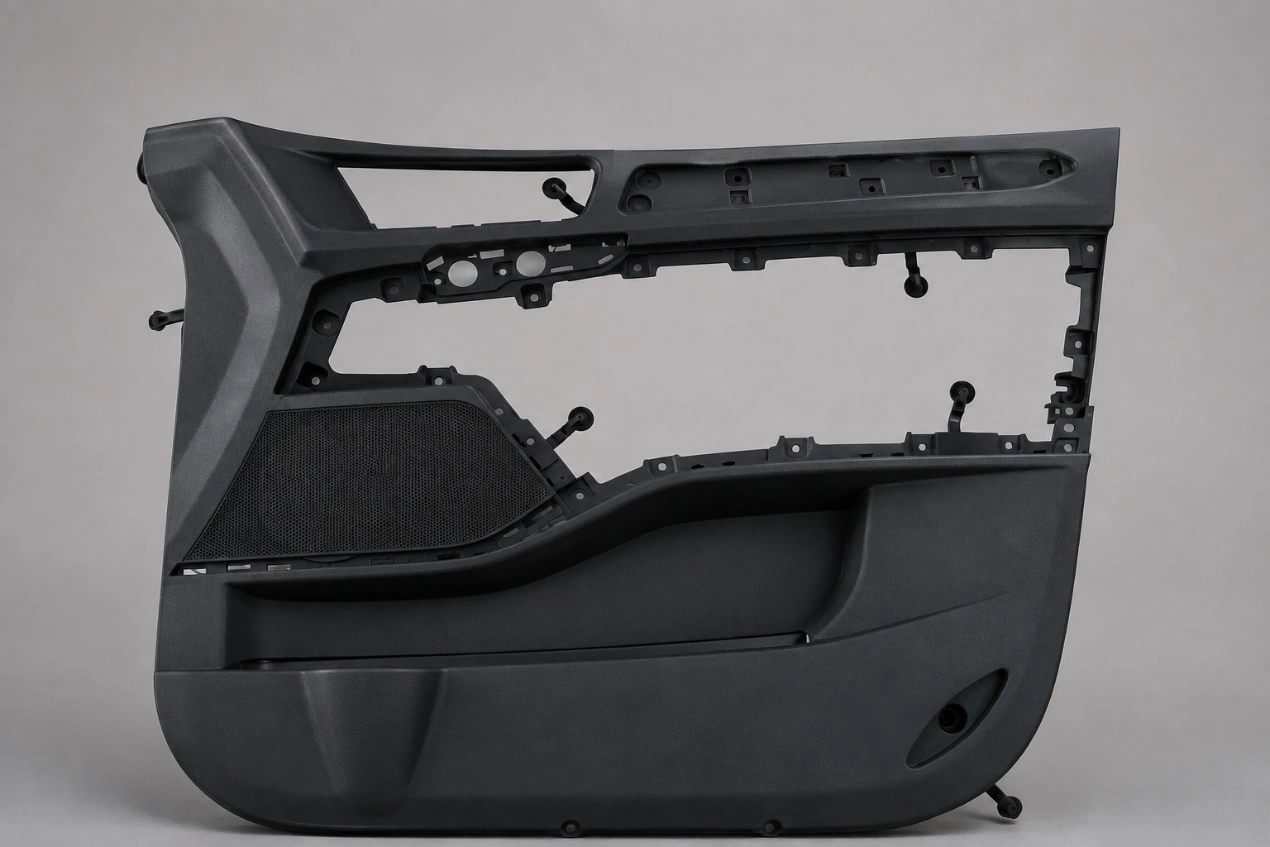
Steel Mold Application
These application scenarios are for selection reference only. Actual projects should also consider part geometry, material properties, quality requirements, and budget.
4. Common Issues When Selecting Steel and Aluminum Molds
Neither steel nor aluminum is inherently superior. The key is whether the selected mold matches the project requirements. In actual projects, many mold failures result not from the material itself, but from selecting the wrong tooling solution during project evaluation. The following five issues are common.
Issue 1: Comparing Only the Initial Tooling Price and Ignoring Lifecycle Cost
Many companies choose aluminum molds by default because the initial tooling cost is lower, while overlooking hidden costs such as maintenance, replacement tooling, production downtime, and delivery delays. Aluminum molds are generally more economical for development validation and low-volume projects. For long-term mass production, however, evaluate the total cost of ownership over the full lifecycle instead of comparing only the first tooling quotation.
Issue 2: Selecting the Mold Based Only on the Current Production Forecast
Early-stage sales forecasts often carry significant uncertainty. If a project uses an aluminum mold based only on the minimum expected volume and orders grow rapidly after launch, the mold life may not support the additional production demand. The project may then need a new steel mold. For consumer electronics, appliances, and new product programs, assess both the baseline and peak sales volumes and consider future capacity expansion in advance.
Issue 3: Building a Steel Mold Before the Product Design Is Finalized
Product development normally includes assembly testing, structural optimization, and cosmetic adjustments. If the design is not yet stable, any later change to a steel mold may require welding, remachining, or even complete replacement, increasing both development cost and lead time. For products still in the validation stage, use an aluminum mold for prototypes and pilot production first, then build the production steel mold after finalizing the design.
Issue 4: Mismatching the Mold with the Material or Surface Finish Requirements
Different plastic materials and cosmetic requirements place different demands on the mold. Glass-fiber-reinforced materials require wear resistance, corrosive materials such as PVC require corrosion resistance, and mirror-finish products require stable polishing performance. If the project considers only tooling cost and ignores material properties and product quality requirements, wear, corrosion, and cosmetic defects are more likely to occur during mass production.
Issue 5: Ignoring the Effect of Mold Complexity on Service Life
The service life of a complex mold depends not only on the core and cavity material, but also on moving components such as slides, lifters, core-pulling mechanisms, and inserts. For molds with frequent core pulling or complex structures, evaluate the complete mechanical design, critical component materials, and maintenance plan. Do not estimate mold life based only on the core and cavity material.
5. Actual Failure Cases
Theoretical material properties provide only a reference for mold selection. The real differences usually become clear during mass production. The following representative cases from Holly Plastic Parts show how steel and aluminum molds perform under different operating conditions.
Case 1: Rapid Wear and Scrap of an Aluminum Mold for an Automotive Glass-Fiber Clip
Project Overview: Automotive instrument panel clip molded from PA66 with 30% glass fiber. The initial forecast was 350,000 parts per year, and the project selected a 7075 aluminum mold to reduce tooling cost.
Failure Symptoms: After 26,000 cycles, the clip cavity profile had worn, reducing the clip dimension by 0.1 mm and causing loose fit during vehicle assembly; extensive flash developed along the parting line, doubling the manual trimming time per shot; the worn aluminum cavity could not be restored by weld repair.
Root-Cause Analysis: Continuous erosion from glass fibers rapidly wore the critical cavity dimensions in the 7075 aluminum mold, exceeding the material’s wear capability.
Corrective Action: The project rebuilt the mold in hardened H13 steel; the steel mold completed 900,000 stable cycles with dimensional variation within 0.02 mm, while the wear-related flash rate dropped significantly.
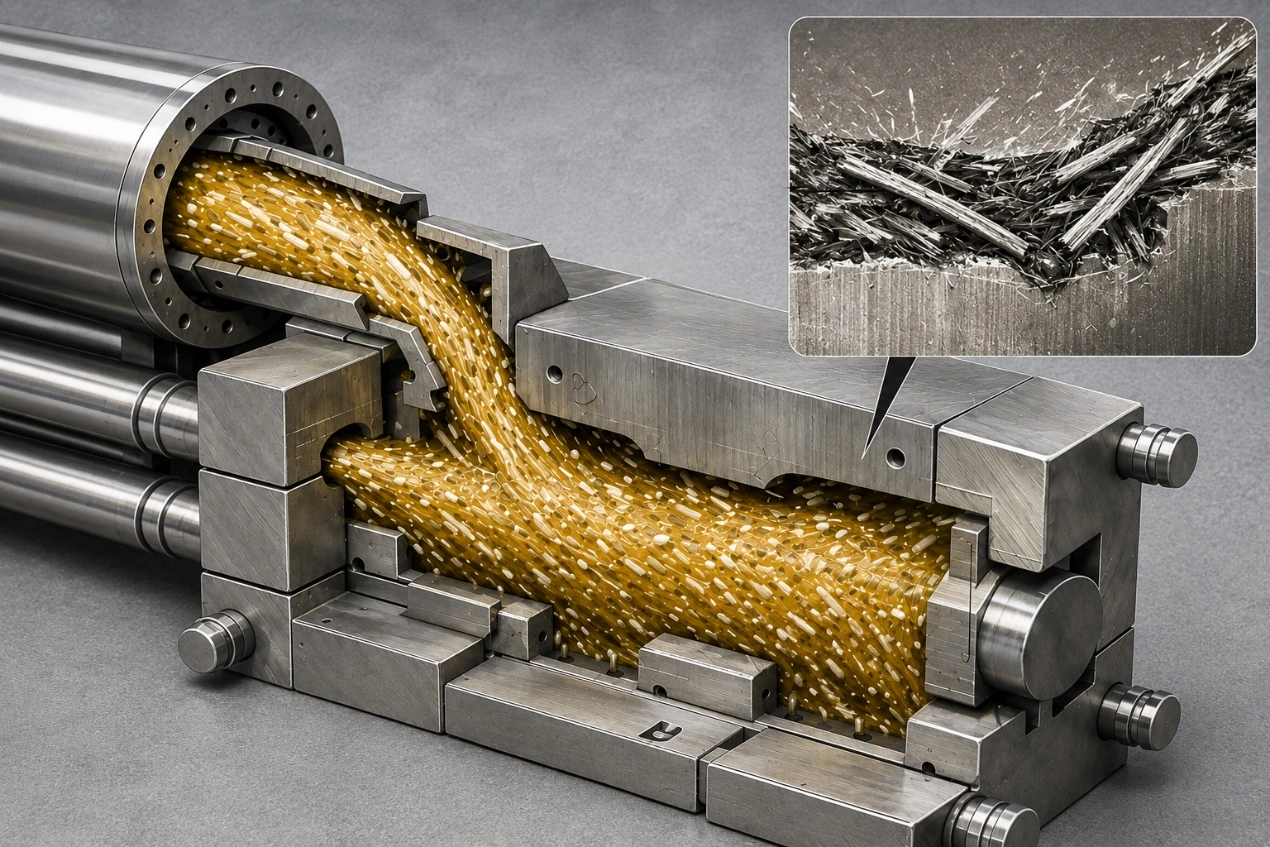
Rapid Wear of an Aluminum Mold
Case 2: Loss of Mirror Finish During Mass Production of a Premium Perfume Bottle Cap
Project Overview: Transparent cosmetic perfume bottle cap requiring an SPI A1 mirror finish. The development schedule was tight, so the project selected a 7075 aluminum mold.
Failure Symptoms: Trial parts had a clear, scratch-free mirror finish; after producing 6,000 parts, the cavity surface became hazy and developed fine scratches. The product gloss failed inspection, and the customer rejected the full batch of 40,000 sets.
Root-Cause Analysis: Aluminum is relatively soft, and its polished surface does not resist friction well enough to maintain a mirror finish over long production runs.
Corrective Action: The project replaced the aluminum mold with a hardened S136 stainless steel mold, which maintained a stable mirror finish and good gloss through one million production cycles.
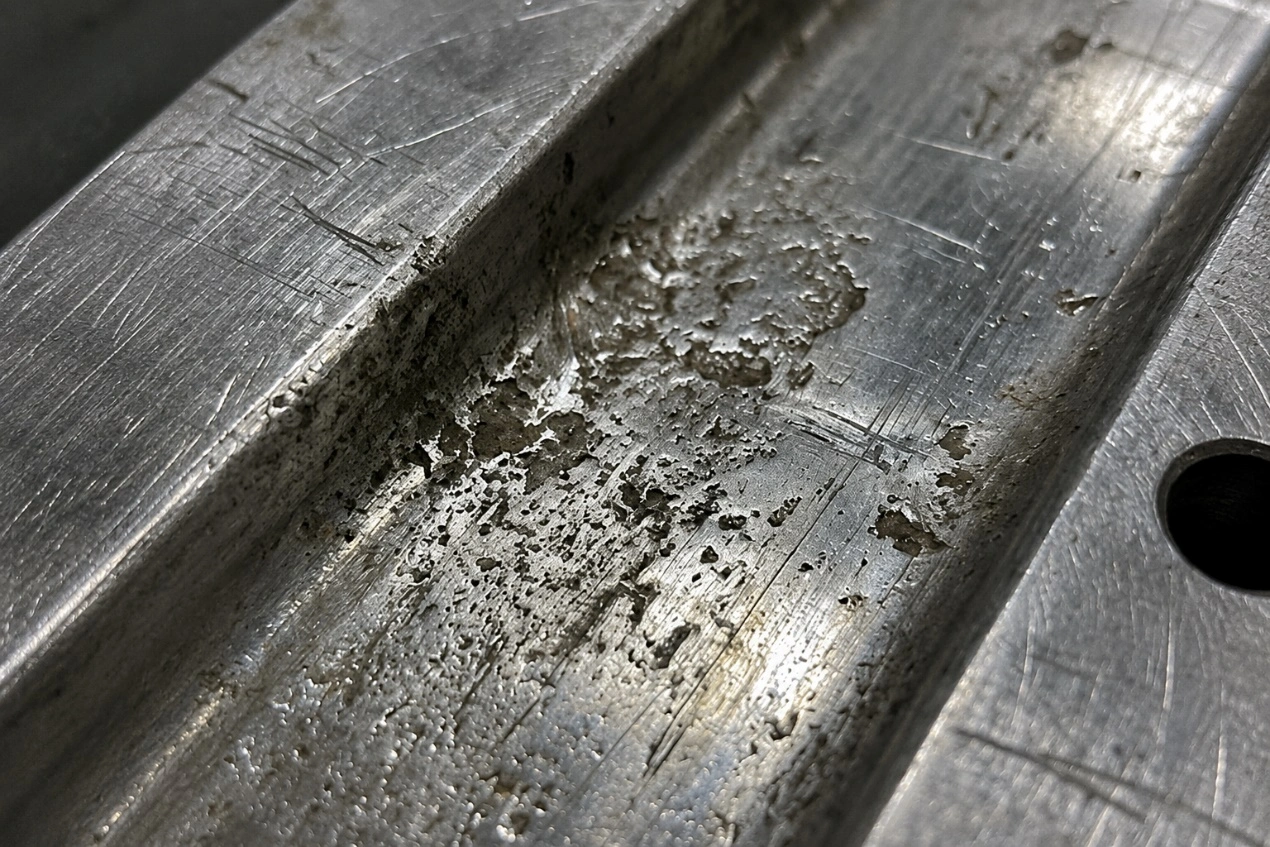
Loss of Gloss During Aluminum-Mold Production
Case 3: Corrosion and Sticking in an Aluminum Mold for PVC Fittings
Project Overview: PVC plastic fitting produced in a low-volume pilot run using an anodized 7075 aluminum mold.
Failure Symptoms: After 12,000 cycles, dense corrosion pits developed on the cavity surface, and black spots and bubbles appeared on 40% of the molded parts; acidic gases damaged the anodized layer, causing repeated sticking and requiring hourly shutdowns for cavity cleaning.
Root-Cause Analysis: Corrosive gases released during PVC processing continuously attacked the mold surface, causing rapid cavity corrosion.
Corrective Action: The project rebuilt the mold in S136 stainless steel. The new mold resisted acidic corrosion from PVC and completed 800,000 cycles with almost no corrosion pitting in the cavity.
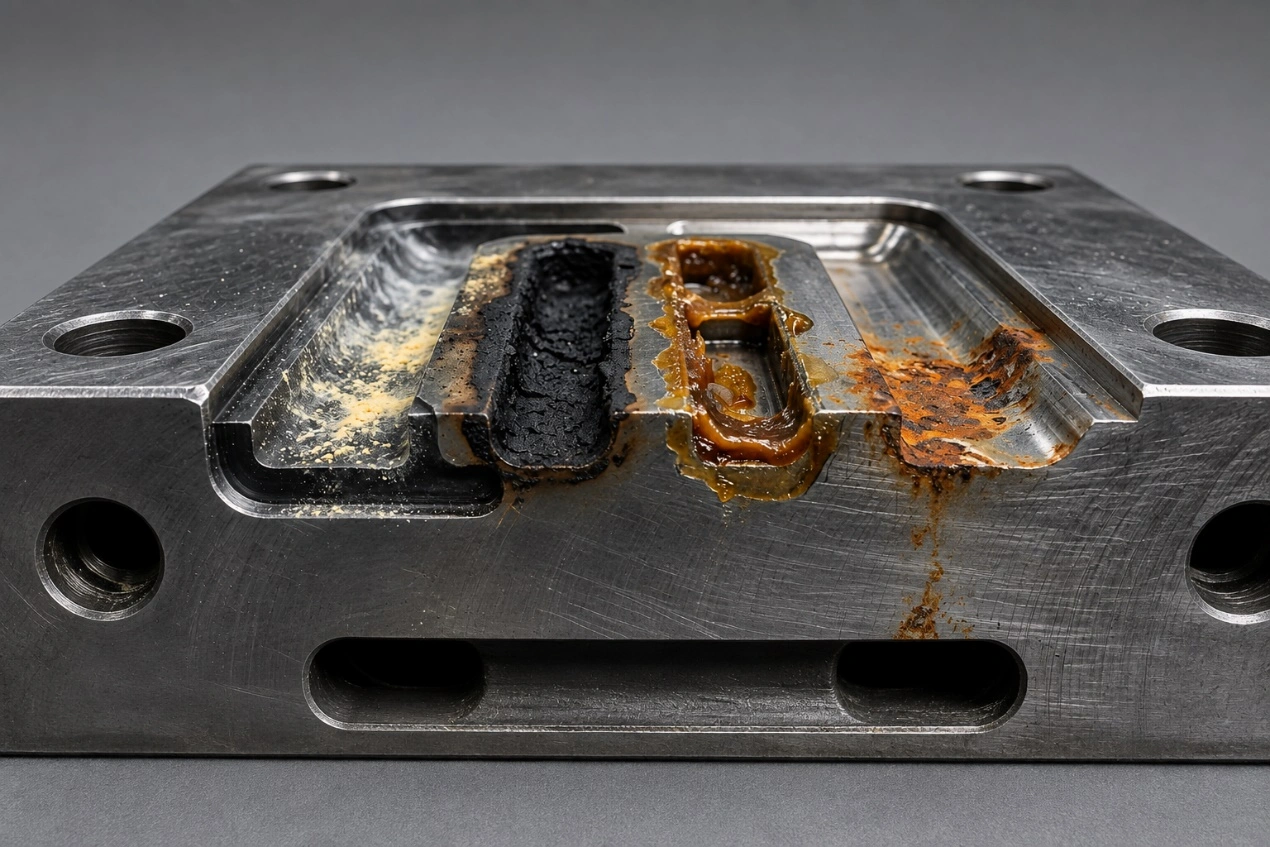
Aluminum Mold Corrosion
6. Conclusion
Neither steel nor aluminum molds are universally better. The correct choice depends on the actual project requirements. Aluminum molds are generally more suitable for development validation and low-volume pilot production, while steel molds are better suited for stable long-term production, highly abrasive materials, and products with demanding cosmetic requirements.
Holly Plastic Parts can assess the product structure, plastic material, expected production volume, and project requirements to recommend a suitable steel or aluminum mold and evaluate the injection molding solution. This helps reduce development risk and overall manufacturing cost.